
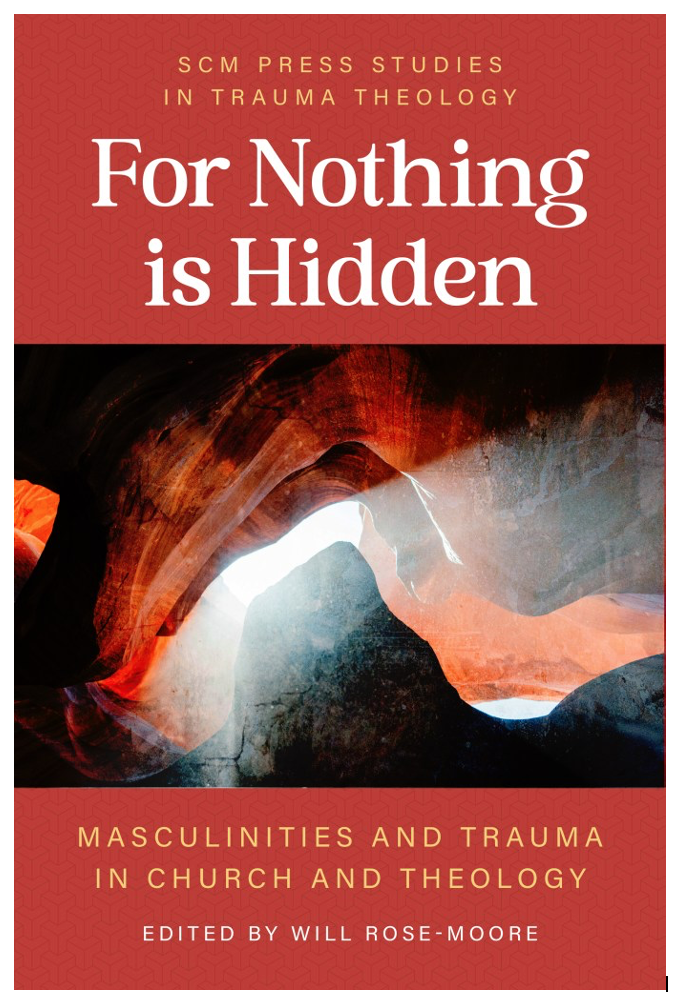
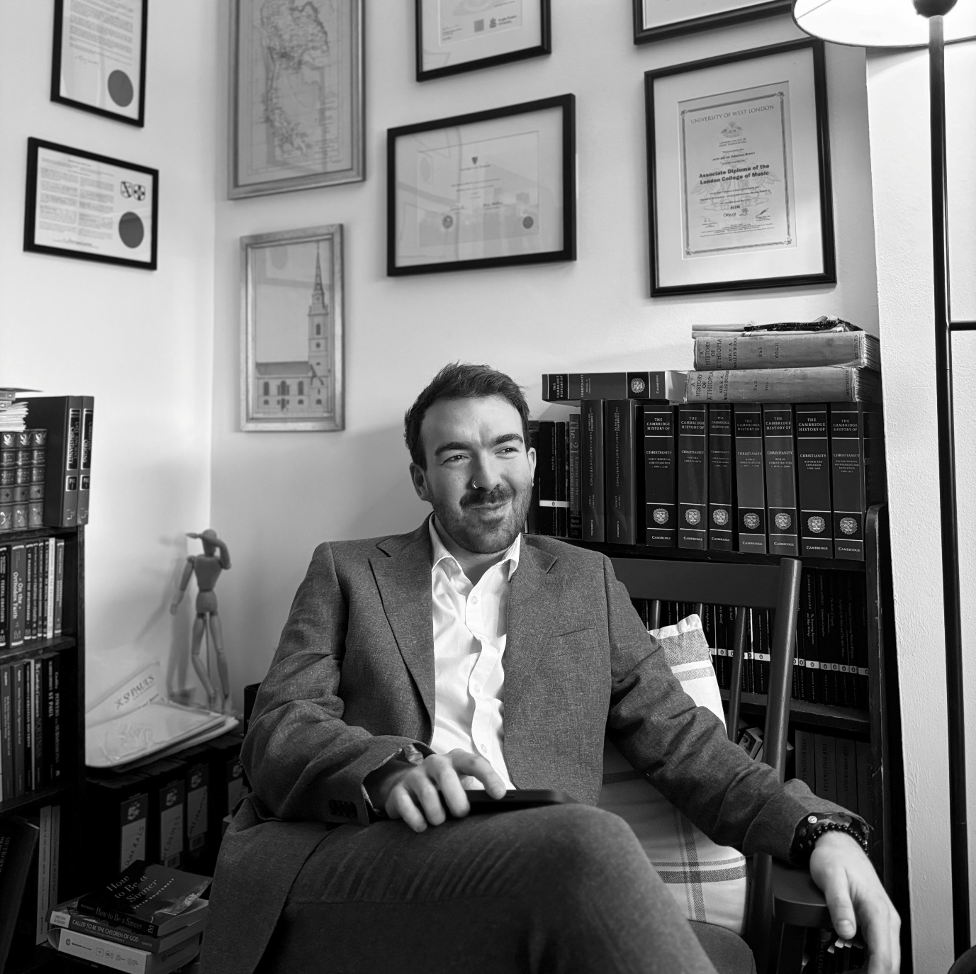
Today’s post is an interview with the Rev’d Will Rose-Moore, editor of the forthcoming book For Nothing is Hidden: Masculinities and Trauma in Church and Theology (SCM Press, June 2026). Will is a priest and theologian, currently serving as Assistant Curate at St. John the Baptist, Loughton in the Diocese of Chelmsford. He is also studying for a PhD in Theology with Westcott House in the Cambridge Theological Federation and Anglia Ruskin University. Will is the author of Boys Will Be Boys, and Other Myths: Unravelling Biblical Masculinities (2022).
Tell us a little about you!
I’m Will Rose-Moore, a priest in the Church of England and a theologian. I am coming to the end of my PhD research, which is focussed on masculinities and theologies. I am also the editor of a forthcoming new volume entitled For Nothing is Hidden: Masculinities and Trauma in Church and Theology, being published with SCM Press in June 2026.
What is the aim of this book?
It’s no secret that the Church of England, and the wider Christian landscape, has been unravelling with more and more abuse and safeguarding scandals – both historical and present-day. The power afforded to priests and the wider institutional church has been manipulated at the expense of the dignity and lives of many victims and survivors of physical, emotional, sexual, and spiritual abuse. There has been much harm done in the shadows, as well as the open. For Nothing is Hidden (the title derived from the words of Jesus in Luke 8) aims to bring to light that which lurks in the shadows and to make known those things that have been wrongly kept secret.
This book calls to attention the particular influence that issues of masculinity and trauma have on these issues. Too often, it is men who commit these offences in the church because of their twisted association with power and privilege. Yet, it is also men who are often traumatised (whether by their wrong actions or by the violence done unto them) but who do not have the resources to enter a process of recovery or remaking, because of gendered scripts that control us.
Theologies of masculinities and trauma theologies are relatively nascent fields, and I argue that they both seek to bring to light that which is hidden. Critical and constructive theologies of masculinities can call to notice and name how patriarchy influences the work of theology and the embodied lives of many men. Myths of masculinity have done violence to the world and to men themselves, as well as to others, as I have argued previously in my book Boys Will Be Boys, and Other Myths (SCM Press, 2022). In trauma theologies, meanwhile, we are invited to address the rupturing reality of traumatic experience and narrate it properly and with honesty. Trauma lingers in the bodies of many without being witnessed and explored; therefore, carefully, this reality needs to be exposed and justice sought in its aftermath. This edited volume contributes to both of these emerging fields in new, fresh ways.
Why might followers of the Shiloh Project be interested in this book?
I am thankful for the work done by friends and scholars of the Shiloh Project. Those interested in the work of the Shiloh Project will be familiar with ideas of gender justice, gender-based violence, rape culture, and abuse. This book contributes to these areas. In For Nothing is Hidden, I argue specifically that both masculinity and trauma have not been considered enough in many works on gendered violence, especially with a critical definition of what these terms mean. This book brings themes of abuse and gender into light with a particularly theological lens, recognising their impact not only on the academy but also the life of the church.
Who has contributed to the book and what do they argue?
We have a fantastic mix of scholars, ministers, practitioners, and poets contributing to this book, all tackling different elements and aspects of the intersection of masculinities and trauma in church and theology. There are five sections, ranging from the traumatisation of men today, to masculinities and trauma in scripture.
Helen-Ann Hartley has contributed a foreword; she was the first and only bishop in the Church of England to call for Justin Welby’s resignation as Archbishop of Canterbury as the Church’s mishandling and suppression of abuse scandals came to light. Then there are chapters by the likes of Karen O’Donnell, Katie Cross, David Tombs, Isabelle Hamley, Alexiana Fry, Carlton Turner, and many more. There is also poetry scattered throughout the volume by the likes of Jay Hulme, Jarel Robinson-Brown, and others to reflect on the academic work outlined.
This volume presents a range of arguments from a variety of perspectives and intersections. Masculinities and trauma are experienced differently depending on many factors, including power and social location. It is for this reason that so much can be said by so many different people. From trans-feminist eucharistic theology and the ecological damage done by men, to torture practices aiming to emasculate male victims, and White men’s colonial mission across the globe, there is certainly no scarcity in rich and diverse content. There will be something useful for any scholar or student in any branch of biblical, religious, or theological studies.
More than anything, this book argues that considering both masculinities and trauma is essential for any conversation around abuse, safeguarding, the state of the church, the work of theology, and the broader pursuit of gender justice.
Where can we get a copy of the book?
The volume is available on the SCM Press website. It is currently available at a reduced price (nearly 50% off!) on Amazon (see here).
I keep my website pages for each publication up-to-date with the latest news and best place for purchase. If you have a review or comment on the book that you would be willing to share, I would love to include it here: www.revdwillrm.com/fornothingishidden
As is usually the case with academic volumes, the RRP [recommended retail price] of the book is quite expensive but I am hoping university libraries will purchase a copy of the volume so it will be accessible to as many church ministers, students, and scholars as possible. If you are a scholar or student, please do request a copy for your own university library!
What impact do you hope the book will have?
I hope this book will bring to light the significance of masculinity and trauma in current conversations around abuse and safeguarding in the Church of England, and the Christian landscape more widely. More than that, I hope theologians might be encouraged to reckon with power in a much more critical, intersectional way. Masculinities and trauma impact all of us in a patriarchal society more than we can imagine, so these issues and themes cannot be ignored any longer. Just as the title suggests, I hope this book brings to light those things which have too long been left in the shadows and makes known those things that have unjustly been kept concealed.
Where can we find out more about you and your work?
You can follow me at @revdwillrm on most platforms – Instagram, BlueSky, TikTok, YouTube, LinkedIn, and probably more! Information about me and my work (particularly my other publications) can be found on my website www.revdwillrm.com
What’s next for you?
With my PhD viva happening at the end of June 2026, I’m hoping to publish my thesis as a monograph in the next year. This work interrogates the relationship between masculinities and theologies from ‘within’: How does masculinity shape theological construction? How can men do theology in critical knowledge of their proximity to patriarchal power and privilege? In what ways can men participate in the shattering of the projection of themselves on to God? What might it mean for men to join the intersectional work of theological and social justice? How can masculinity be useful to theology? These are just some of the questions I address, and I hope you will be able to read more about them soon. Stay in touch and stay tuned!
[Image courtesy of Will Rose-Moore]


