close

Bible

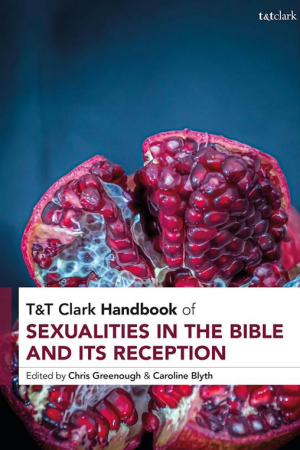
Q & A with author Chris Greenough: The Bible and Sexual Violence Against Men

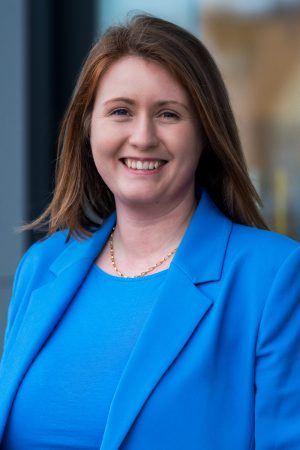
Photo of Chris Greenough.

Tell us about yourself. How does your book relate to your work as a whole and how did this book come about?

I’m Senior Lecturer in Theology and Religion at Edge Hill University. I got my PhD from the University of Birmingham in 2016, under the expert supervision of the most marvellous Dr Deryn Guest. I’m interested broadly in gender and sexuality and how it interfaces with religion, including LGBTQ+ identities, and queer theologies. 

The Bible and Sexual Violence Against Men is my third monograph. One of the texts I discuss in the book is the story of Sodom and Gomorrah (Genesis 19: 1-29) and its legacy of being a text that condemns sex between men. The text is still used in an abusive way today in an attempt to bolster arguments against same-sex relationships or against gay marriage, for example. Religious teaching about the text has resulted in shame and stigma around same-sex relations, yet the passage is not about consensual, loving same-sex acts at all, it is about attempted male rape. 

The book came about when, originally, I was working with the brilliant Dr Katie Edwards on a similarly-themed book. We quickly realised there was a lot to cover and there was therefore a need for two complementary texts. Katie’s book is also forthcoming in the Routledge series. It was such a rewarding experience to work with Katie, and with the editors of the Routledge Focus series on Rape Culture, Religion and the Bible – Prof Johanna Stiebert and Dr Caroline Blyth. I’m ever so grateful for their support during the course of the book’s journey.

What are the key arguments of this book?

Within the first chapter of the book, I set out the importance of the topic for readers of the Bible today. 1 in 6 men have experienced some form of sexual abuse and the most prolific case of serial rape in UK legal history involved the rape of nearly 200 men. In the book, I argue how religion and society, while bolstering hegemonic masculinity and sanctioning heteronormativity, have contributed to a blindness to male sexual abuse in today’s world. I explore the reasons for shame and stigma that surround male sexual abuse, along with unhelpful myths that prevent men from reporting and seeking support. In Chapter Two, I examine passages from the Hebrew Bible that describe male rape or attempted sexual violence against men: Lot’s daughters who get him drunk and rape him in order to procreate (Genesis 19: 30-38); Potiphar’s Wife’s sexual advances against Joseph (Genesis 39) and the attempted rape of men (Genesis 19Judges 19). In Chapter Three, I turn the attention on Jesus’ enforced nudity at his crucifixion, and I examine sources that denote how such an act was a public humiliation and shaming of a man. The shaming was sexual. Reading Jesus as a victim of sexual violence remains a contentious issue in theology and biblical studies, as well as in wider faith communities. I explore why there is such stigma around these issues, which are undoubtedly connected to the fact he was a man. 

What do you hope readers will take away from this book?

In general, critical studies into sexual violence experienced by men remain relatively scarce compared to scholarship exploring the rape and sexual violation of women. This is undoubtedly due to the fact that women experience sexual violence on a much greater scale than men. My aim is that the book generates an awareness of the lived realities of sexual violence against men, and that such an awareness will help debunk some of the myths that men cannot be abused.

I also hope that the book can serve a number of interested readers, including those who may be coming to explore the content of the biblical texts for the first time. For this reason, I wrote the book using a number of different critical approaches from theology, biblical and religious studies perspectives, while also exploring insights from the fields of sociology, psychology, criminology, as well as referring to legal cases and legislation, charity work and media-focussed articles. 

Give us one quotation from your book that you think will make readers want to go and read the rest.

“a blindness to the sexual violence Jesus endured has led to a blindness to sexual violence against men in general.”

read more

Q&A with Nancy Tan, author of Resisting Rape Culture: The Hebrew Bible and Hong Kong Sex Workers

Resisting Rape Culture book cover by Nancy Nam Hoon Tan.

Nancy Nam Hoon Tan has featured as activist on the Shiloh Project. From Singapore, where she is now resident, she taught Hebrew Bible at the Chinese University of Hong Kong. Her published work demonstrates acute sensitivity to power dynamics, focusing particularly on the intersections and tensions between gender, ethnicity and notions of belonging. Nancy’s earlier work showcasing this includes her monograph The ‘Foreignness’ of the Foreign Woman in Proverbs 1-9 (De Gruyter 2008) and her chapter on women, colonialism and whiteness in The Bible, Centres and Margins (Bloomsbury T&T Clark, 2018).

Her latest book is in the Routledge Focus Series Rape Culture, Religion and the Bible. Entitled Resisting Rape Culture: The Hebrew Bible and Hong Kong Sex Workers (2020), this a tour de force combining scholarship and advocacy.

Here is a Q&A with Nancy…

1. Tell us about yourself! How does your book relate to your work as a whole and how did this book come about?

For many years I was based in Hong Kong, where I taught and researched the Hebrew Bible. I opine that interpretations of biblical texts, both by academics and by faith communities, matter— maybe especially for individuals and communities who use the Bible to guide how they should behave and act. But the Bible and how it is interpreted also has bearing on society well beyond this – maybe more so than we think.

Most of my work has focused in some way on women, gender, power and oppression – and this book is no exception.

While living in Hong Kong, I volunteered as a teacher of English at the Jei Jei Jai Association (JJJ), the city’s first self-help and independent organization run by sex workers. This opened up for me the opportunity to get to know the sex workers as friends and to learn about their profession. This engagement also confirmed for me that the current interpretations of biblical texts on “prostitutes” and “prostitution” promote stigmatization and victimization of today’s sex workers.

With the help of Ms Sherry Hui, the co-ordinator for JJJ, I was able to hold the reading exercises on biblical texts with the sex workers that are at the heart of this book. It was Professor Johanna Stiebert who invited me to contribute the outcomes of these reading exercises in the framework of “rape culture”. Indeed, this couldn’t have been more apt, because the injustices that Hong Kong sex workers are subjected to stem from rape culture. And so… here is the book!  

2. What are the key arguments of this book?

First, this book debunks rape myths such as: “sex workers cannot get raped”, “sex workers are immoral and deserve punishment”, and “if women don’t resist, they aren’t really raped”, etc. The book shows how such rape myths contribute to the escalating violence that Hong Kong sex workers are facing.

Second, the book also shows that biblical scholars rarely consider how certain biblical texts and interpretations of them, too, promote stigmatization of today’s sex workers and rape culture. This is thrown into relief by engaging Hong Kong sex workers in the reading and analysis of three biblical texts of the Hebrew Bible where the Hebrew root word znh, often translated as “prostitute” occurs: namely, Genesis 38, 1 Kings 3:16–28 and Hosea 1–3. Each reading unpacks where rape culture and the stigmatization of sex workers lie and through the sex workers’ standpoints, these texts are revealed in a new light.   

3. What do you hope readers will take away from reading this book?

I hope readers will see the humanity and dignity of sex workers. Sex workers deserve to be respected in every way, and the hatred that society has mounted against them is cruel and unjust. I hope this book will change the way we talk about and the way we treat sex workers. 

I also hope that this book will persuade readers that interpretations of the Bible need to be re-evaluated. I hope it will encourage readers to ask themselves, “Do interpretations do justice to marginalized communities today? Do they promote hatred and reinforce oppression?”

I hope readers will be informed and come to realise how subtle and dangerous rape myths can be: rape myths find support from biblical texts, and, consequently, biblical texts can become justifications for violence against humanity.  

4. Give us one quotation from your book that you think will make readers go and want to read the rest!

“One of the sex workers disagreed with the statements the others made concerning women’s decision to return to abusive men because of the children. … She would not allow anyone to harm her in this way and would rather lose her life to fight for freedom. …She said if women would not protest against such wicked threats on their lives, then the children would not learn to fight for what is right and just. In this way, cycles of abuse continue. She regretted that that is how abusive men keep oppressing women…” Find it and read the rest!

Photo of Nancy Nam Hoon Tan.
Nancy Tan

Nancy’s book is available for pre-order (see here) and will be dispatched by 1 September.

read more

COVID-19 Lockdown Series: Mmapula Kebaneilwe

A Bit about myself:

I am Mmapula Diana Kebaneilwe, a Womanist scholar and Senior Lecturer of Hebrew and Old Testament Studies at the University of Botswana. I did my PhD with the University of Murdoch in Western Australia, and completed in 2012. The title of my Thesis was “This Courageous Woman: A Socio-rhetorical Womanist Reading of Proverbs 31:10-31.” (The thesis can be found online here.) I have a wide range of research interests, including; women and the Bible; HIV, Aids, the Bible and women; women, gender and the Bible; the Bible and environmental issues; rape culture, gender and the Bible. Above all, my keen interest concerns gender justice and hence, researching on issues relating to women is important to me. The quest stems from my own context, which is patriarchal and marred by gender-based violence.

What I have been up-to during the COVID 19 Lock-in

To be honest, COVID 19 has left me confused, worried and without motivation or energy to do much. However, as the lock-in proceeds into the third week in my country (Botswana), I seem to be unstiffening a bit and I guess I am now getting accustomed to my ‘new normal’ of being just at home. I believe I am also getting to grips with the current reality and learning to live with the fact that the entire world is faced with a pandemic and everyone is affected in some way or other. On a more positive note, I have been doing what I enjoy most, which is gardening. I have started a small vegetable garden, which I have mixed with my usual plants and flowers that I tend every day. I find this very healing to my soul.

I also have a lot of academic work to do during this time (much of it is backlog from a few months ago). The work includes co-editing for a volume on ‘Mother Earth’, a book project, which is a collaboration with different scholars who presented papers at the 2019 Circle of Concerned African Women Theologians, held in Gaborone, Botswana. I am also working on my book, which is adapted from my PhD thesis and which has come back from a second round of the review process, just a few days ago. I have also received back reviews for a chapter that I am contributing to a project on #Jesus Too, edited by Jayme Reaves and David Tombs.

Aspects of my work, past and present that might of interest to the Shiloh Project supporters?

I think some of my work that might be of interest to supporters of the Shiloh Project may include first, my PhD Thesis (2012). This is so because in that I explore some of the issues that relate to the intersection between, the Bible, culture (in this case Botswana culture) and women. Attention is paid to the portrayal of a woman in rather strong and affirmative ways in Proverbs 31:10-31. Such is not commonplace in the Bible. I bring the portrait into engagement with how women are treated in my culture, especially in relation to their male counterparts and in relation to marginalization and disadvantages for women on different levels. My conclusion is that the text of Proverbs 31:10-31 unapologetically advocates for gender equality.

Another of my past works that may be of interest is an article titled “The Vashti Paradigm: Resistance as a Strategy for Combating HIV.” Ecumenical Review 63/4 (2011): 378-384. As the title suggests, in this article I see Vashti, a female character in the biblical book of Esther, as a heroine. Her subversiveness and defiance in the face of male oppressive authority celebrates her dignity as a woman. I advocate that Vashti can speak also to those who find themselves in similar situations of oppression. My conclusion is that despite the potential danger in challenging oppressive systems, cultures and contexts, like Vashti did, ‘it is never too late to say no to oppression’. 

A forthcoming article might also be of interest, “The Untold Story of Mrs Noah: The Hebrew Bible, Gender and Media: An Intertextual Critical Discourse Analysis.” This is forthcoming in the BOLESWA Journal of Theology (2020 sometime). This piece is co-authored with a colleague and friend, Dr Sibonile  E. Ellece, from the English Department of the University of Botswana. We try to reconstruct the life story of the wife of Noah. We argue that because of its androcentric nature, the Bible tends to omit the stories of many women, including that of Noah’s wife. We call the otherwise unnamed woman ‘Mrs Noah’ in order to problematize the un-naming, which not only obscures but virtually erases her identity. Our conclusion is that in our patriarchal contexts, too, women often suffer from a lack of media coverage, conveying the sense that their stories do not really matter, at least not as much as men’s stories. But in reconstructing Mrs Noah’s story, using intertextual critical discourse analysis, we maintain that she was a woman of courage: a wife, a mother, a home-builder and Noah’s pillar. She, too, like her legendary husband, must have professed strong faith, ensuring her survival and that of her family, while most of the entire world perished.

What is helping me most during this unprecedented time of COVID 19?

Like I mentioned before, gardening and decorating my home is something I enjoy doing. I spent my first day of lockdown painting one of the rooms in the house. I love it. I then started spending mornings and evenings doing some gardening, which includes planting vegies, trimming duranta plants, cultivating the soil around my little roses and other flowers, and just cleaning the yard – stuff I often do not have much time to do under normal circumstances. I have since been doing some yoga and pilates each evening in order to stretch my otherwise aching joints. This has been very helpful and is making me feel good, both physically and emotionally. I have now added some skipping rope exercises where I do 300 skips a day and that makes me feel fantastic. Of course, I am also trying to stay away from frequent visits to the kitchen and the fridge for some nibbles, because though these are particularly accessible ‘places’ currently (given the stringent restrictions on movement) it is not such a good idea to spend too much time there.

read more

COVID-19 Lockdown Interview Series: Barbara Thiede

Rabbi Dr. Barbara Thiede

When my university (University of North Carolina, Charlotte) went on spring break March 2, I made the decision to see if I could put all my classes online. Because I also teach online for ALEPH Ordination Programs (a Jewish seminary which ordains rabbis, cantors, and rabbinic pastors), doing so was not as difficult for me as for some of my colleagues. In the meantime, my spouse, Ralf, and I moved roomfuls of furniture around in our little ranch house to accommodate our son and daughter-in-love, who moved out of a tiny one-room studio apartment in Brooklyn, New York,  into our tiny home library (now outfitted with a bed, sitting area, and workspace!).  We joked about how much the room would go for on Airbnb and promptly dubbed it R&B (Ralf and Barbara). We’ve been alternating the cooking, so I’ve been treated to some real culinary variety.

Next, we started a huge project in our backyard, clearing away a veritable mini-forest of dead shrubbery that wisteria had marked, claimed, and devoured, and built three raised garden beds. This also necessitated digging up loads of mulchy dirt, moving it aside, creating the beds, refilling the beds with the dirt and home grown compost, and planting our vegetables. This explains the picture of me lying face down in the grass while our son grins up at his dad. His back is stronger. So far, everything is thriving and we look forward to the first products gracing our table.

For the first weeks, working was very difficult indeed. Finding a routine was challenging. My students have felt the stress and, since we take the time to check in, it is clear to me that they are facing a range of serious issues.  One is a refugee whose mother works at Wal-Mart; another is taking care of an elderly and sickly grandmother. I’ve known what it is to have students in vulnerable situations every semester of my teaching life, but now, I think it is fair to say, they all are vulnerable. One student has a daughter whose best friend died of Covid-19 — she was in her early thirties; another was clearly suicidal and needed connections with health care professionals. Sometimes, I start our check-ins with lighter questions just to relieve the stress: “A package just arrived at your door. It is perfectly safe to open it. What’s inside?” Answers included, of course, masks, cures, vaccine. And they included: “My mom!” “A puppy!” “A boat!”

Which aspects of your work past and present might be particularly interesting for supporters of the Shiloh Project?

My current book, Male Friendship, Homosociality, and Women in the Hebrew Bible: Malignant Fraternities, treats a set of texts that  demonstrate how male friendship depends on women’s bodies for its creation and sustenance. I am also preparing a paper for SBL entitled “Gang Rape, Murder, and Dismemberment in Judges 19-21 and Little Bee: How Biblical and Modern Authors Inflict Moral Injury.”

How are you bearing up and what’s helping you most? Am I behind in my work? Of course. Do I feel — all the time — that I can’t actually grasp the depth of dislocation the world is experiencing? I do. Do I sometimes resent the “we can get through all this” when so many won’t? Yes. Do I fear that we will not learn the lessons of this experience? I do. Humankind is notoriously insufficient at caring for humanity and the planet it lives on. 
I am bearing up by walking a lot, by gardening as much as I can, and by listening to a lot of Sephardic-Ladino-Iraqi-Turkish music. It reminds me to dance. And I hope and pray for humanity to pay attention to the obvious lesson, here. We share this world unequally. We suffer its pain unequally. We are obliged to flatten that curve, too.

read more

COVID-19 Lockdown Interview: Laurie Lyter Bright

Since shelter in place began in Wisconsin, I’ve been balancing pastoring a church through a virtual Lent and now Holy Week, executive directing a non-profit that supports peace-building through interfaith schools in Palestine and Israel, working on my dissertation, and keeping two very small children alive and happy. My husband’s a full time grad student in nursing, so our days are full. Work takes place in the margins around our new reality, and maybe that’s closer to where work should have always been in terms of priorities. I’m surprised by how the preciousness of time has been illuminated in this crisis.  When writing can only happen between the start of nap time and lunch, you learn to write very efficiently.

My dissertation work emphasizes the role of the Christian church (particularly U.S. manifestations thereof) in co-creating rape culture and is seeking ways for the church to be a part of disrupting rape culture instead. My new work in progress for the Shiloh Project series with Routledge Focus is exploring the role of the prophetic in both the #MeToo and #BlackLivesMatter movements.  Getting to interview and collaborate with scholars in these fields has been an absolute privilege and I’m grateful for the access to technology that allows me to keep moving forward on both projects even in a time of lock-down!

I am running the full gamut of feelings in this season and allowing myself space for all of those emotions is what’s keeping me going.  I am profoundly thankful – that my family are healthy, that my kids are too young to be scared by what’s happening, that my partner is also my best friend, that my work can be reasonably accomplished remotely, etc.  I am profoundly sad – at the loss of life, the co-morbidity of the weight of poverty and racism in my country, the suffering that was preventable, and more. I am angry – at the pathetic excuse for leadership in my government, at our collective fear responses. I am proud – of the community spirit that rises above, the difficult but necessary questions and conversations that are rising to the surface.  And I am baking right up to the edge of an unhealthy amount of cookies.

read more

COVID-19 Lockdown Interview: Tom Muyunga Mukasa

Tom Muyunga Mukasa is originally from Uganda. He was resettled as a refugee in the USA. He is currently in Kenya. Tom is HIV Care and Global Health Specialist; Manager of the House of Rainbow HIV/AIDS Protection and Advocacy Consortium; and Co-founder of Advocacy Network Africa (AdNetA). He works towards enshrining human dignity by leading a number of campaigns. These are aimed at refugee integration and protection in host communities, the elimination of violence against women, the promotion of wellness that integrates Universal Health Coverage (UHC), and at ending TB, HIV & Malaria by 2030. AdNetA is also active in the campaign to end COVID-19.

  1. Tell us about yourself and about what you’re doing and what you’re working on and how, during this COVID-19 lock-in.

Thank you so much. Right now I am in Nairobi. In August 2019, I came here to Kenya as a student volunteer from St Mary’s College of California, USA. I went to do volunteer work in Nyeri Town, which is about 200 kilometers from Nairobi. I lived at St. Mary’s Boys’ Vocational Rescue Centre and Secondary School up to November 2019. This is a combined vocational and rehabilitation school for boys aged 3-20 years. I facilitated the establishment and development of community organisation frameworks that enable Lasallian Volunteers to participate in effective change activities during their African experience tours. (La Salle, or the Lasallians are a Catholic order established in 1679 by John Baptist de La Salle. Today the Lasallians minister to around 900,000 students in universities, schools, educational and welfare institutions in more than 80 countries all over the world.)

While working in Nyeri, my own focus was on the Secondary School and how its communities could engage the large youth population in sports, livelihood, vocational skills and other capacity-building. Together we came up with tailored programmes to provide younger people with opportunities to improve healthy and purposeful living, self-esteem and to avoid  drug-use due to peer pressure and other factors. The Lasallian volunteers helped facilitate these sessions.  I developed a strategic plan for 2019-2025 hinged on economic development, orphan support and rehabilitation. We presented this to the local government and they promised to support it fully. Alongside my volunteering, I was engaging in my own research work in drug-use disorders, conducting fieldwork in three informal settings in Mountain Kenya, Eastern and Central regions. Into this research, I incorporated queer refugee issues. I developed my findings into abstracts, which were accepted by the International AIDS Conference 2020 among other conferences.  I had worked on preparing twelve presenters, all, like me, queer refugees. All abstracts were accepted and we were rearing to go! But… COVID-19 restrictions are now in force here in Kenya and the conference will be held via virtual sessions.

Fast forward to lock-down, or lock-in here where I am now, in the Matasia zone of Ngong in Kajiado County on the outskirts of Nairobi. It is one of the largest, most urbanized and most densely populated areas of Kenya. Right now I am managing a community health awareness programme run by volunteer refugees. Some refugees are now resettled in Kenya, others are waiting to be resettled in a third party country. But, they agreed to work with me and have brought into the campaign their lovers, friends and acquaintances. Our campaign is growing in numbers! At the core are people I had earlier identified as key-Informants. While we were still able to do research work or data collection in the field, I found 7 persons living with TB whom I immediately connected to health care facilities. I had some little money on me and provided them with a month’s supply of food. All 7 are now 4 months along a steady healing process.  These 7 enabled us to penetrate deeper into their networks and we have linked more and more TB patients to care and hope to continue with this.

As a trained infectious diseases specialist, when I heard of this particular kind of infection, rumbling across from China to other places, I knew I had to act fast. There was no way Africa would escape! Given the health care facilities as the risks posed by increased hospital attendances, there was much to do, and fast. This is much on my mind.  We have been able to secure 4 months’ medication supply for the TB patients. Those who are HIV positive were also given the same amount of medication. This is called aligning medication supply. I connected patients to AMREF, Red Cross, different CSOs and local government hospitals where they are now getting more support beyond what I could provide. 

I am now embarking on training mobilisers to become Anti-TB Champions and I am integrating COVID-19 Response and Prevention into this campaign. What I have not yet mentioned is that I am connected with the Switzerland-based WHO division on TB. I engaged with them and advocated on behalf of TB patients back in November-December 2019 already. I did it because I felt my voice could add to finding ways to meet their needs. I even wrote a concept note on TB prevention. I felt I owed the communities I had visited during data collection. I wanted to give back in a small way. So, I have designed what we call the TB Prevention Communities of best practices. This is an iterative model with 15 steps that is both pedagogical and a heuristic.

The best practices are hinged on: Identification, Participation, Access, Hygiene, Adherence and Self-Esteem (IPAHAS). When a patient is identified, the Anti-TB Champions catalyze full participation of the person to be evaluated for TB, going through all the nine yards from testing to taking medication for the first crucial 8 weeks and then beyond. The Champions help with access to housing, nutrition, transport and with medication not being disrupted. Given the present situation, we have had to adapt, so I have shown them how to use WhatsApp groups and Facebook or Zoom to communicate, inform and educate. 

Most of our TB and HIV patients live in one-room houses.  We got lucky in that the organisations we linked patients to have provided food rations, masks and aromatic detergents, which they can use to wipe surfaces, clean toilets and bed pans or night pails. The practices for helping people with TB and compromised immunity also help with limiting the spread of COVID-19. I have come to note that COVID-19 restrictions are now making it easier for TB patients to be less stigmatised. Wearing masks no longer leads to stigma: it no longer signifies disease but precaution, self-care and care for others. The sweet-smelling detergents have made the dwelling places less unpleasant. Food is shared around in these hard times – because life is restricted and hard for everyone just now.  (I have written a short perspective report intimating  this tendency.) I am sure the Anti-TB Champions continue to be motivated, not least because they are receiving food rations too and they are helping one another, as well as relatives and friends. 

Personally, I am staying in, as instructed. I am concentrating my efforts and trying to keep expenses to a minimum. I am training my teams via zoom, video calls and email instructions. I continue my work as Social Justice Practitioner in whatever way I can. Motivated by the UN SDGs, I focus on a range of community activities, focusing most on conservation, Universal Health Coverage (UHC), elimination of violence against women and on ending TB, HIV, and Malaria by 2030. These are all connected. But now, I am also integrating COVID-19 into my work, because this is pressing. I make virtual work activities and share them online. I have become busier while I am following up my patients from home.

  • You have added COVID-19 to your earlier campaigns which included preventing transmission of TB, HIV and Malaria. You also have years of experience of advocacy for LGBT rights and you are passionate about ending gender-based and sexual violence. Tell us more. What drives you and what do you do?

Ha-ha! Professor Johanna, I am humbled by the statement and question. A long time ago in Uganda as a younger medical student I volunteered with the Rotary Club. We were taken to an island far into Lake Victoria to popularise immunization and digging and using latrines. You know, we were young and from the ivory tower. It was supposed to be a one-time thing. We were given this opportunity to see the world’s realities and to relate them to our book learning.  

I was touched and after my return asked to be included on a list of those who would volunteer regularly. Little did I know that this was preparing me to polish my social face of medicine! This was a time when almost everything was ‘medicalised’, if you get what I mean. There was an expectation that medication was the solution to so many things, a whole laundry-list of issues. Not all of these, however, actually required medication (tablets, drops, operations…) at all. They were health matters but what they needed was something else. I’m talking about such things as domestic abuse, sexual and gender-based violence, husbands using up their wives’ savings and giving the lame excuses of ‘I am the man of the house: I do as I like!’  I was a witness during a meeting in which a woman had brought a case against her husband. Guess what it was about, Professor? The woman had come to report the husband for not beating her when she made any mistake like when they had just met! No, seriously Professor! Her expectation was that when your husband beats you, it means they love you and when they ignore you, it means they have someone else who is special (enough to be beaten). 

I come from a family of nine mothers and many children. I know so many other families like mine. I think I was made an activist subconsciously, without realizing it, through my close relationships with women and children, who often suffer the brunt of patriarchal violence. Or, maybe, I am correcting things, or reconstructing things and it is just plain rebelliousness on my part! My passion about ending gender-based and sexual violence is rooted in what I grew up seeing at home, in my communities, in wider African society. It is rooted too in my joining the organizing committee of a San Francisco-based Women’s March, where I have served since 2013.

Professor, knowing you and how you guided us in sharing real lived stories [for the report, see here. Tom is in the picture, wearing a crown], I am dwelling so far on the positive side of things. Let me share how it might have begun as well. I knew I had to be part of the solution to put a stop to the mentality that women are regarded as inferior. But funnily enough, in my earlier days, being male, not White, and without money, in Africa, I met with the most vehement of barriers. Being a male, people, including women, called me names whenever I appeared in meetings on women’s and girl children’s rights. You should have been there! But hey, they did not know me that well. I am a very determined and different male but they did not know this at first. So, I just went on doing my work. Well, to cut a long story short I am here still and I am a social justice practitioner among many other hats I wear.

Thank you so much for supporting my work. You know and have seen me at the frontline where you have been as well. I am sure all your faculty colleagues are ‘radicals’ (ooooops, sshh, do not say I said this!) But, what I mean, is that on behalf of many others, thank you so much for coming into our lives. You asked what drives me. I enjoy passing on skills to others and to see them turn into self-driven actors too. This takes patience and guidance but when results start showing, I go to bed and sleep like a log. I have seen the people I train become the better version of who they could be. I have seen transformation manifest before me. I have witnessed people who gain the skills, change into adopting healthy practices and behaviours. They turned out to be recognised and this increased their being dependable and admired by others who work with them. It is this that drives me! Thanks.

  • How you bearing up and what is helping you, or would help you, most?

Professor, is this a trick question?  But, let me answer it as I feel it in my heart and belly. I am scared. My life has had so many turns and all of them following each other in sequence. I am not a biblical Job! I am just a Black male striving to be good. I want to be a scholar and not a raw field epidemiologist, for crying out loud.  I made a decision to improve myself scholarly-wise and chose to take on the discipline of Political Science. I hope to complete every requisite and to be taken on to a PhD programme (they write ‘program’, that other side of the Atlantic) at Princeton University. I was given a promissory letter and the conditions I need to fulfill. Part of my coming to Kenya to do community work, was to prepare me and give me an advantage to get into Princeton. I am competing with 45 others but I am not scared at all.

But now, COVID-19 has come along. I am wondering how I can return to the USA, say in December 2020! These things go on and on and they require vaccines. Nothing else can hurry things along! For now, I have tried to put all my worries aside and have engaged in anti-infection activities with which I am so very familiar, given my earlier, medical incarnation. I am helping a team here and more people, too, via phone. I have written perspective reports which are read widely and I am so happy there is a sector that asks for my opinion.

Professor,  I know I am going to be here until December. I have given myself that period. Keep the Shiloh Project moving please, we read it here. By the way, I also follow your University of Leeds Faculty colleagues via Twitter. I like the themes you cover. They are so heart-tugging, they make one realise how comfortable they have been to the point of exuding a self-righteous air about them, and they are so ‘radical’.  I realise I am slowly learning to effectively ask questions that make our society more involved in healing.  Maybe one day I shall ask to come there as an exchange student to sit down and get trained or just converse! Thank you.

[From Johanna: Tom, we need you here! You could give us a good dose of reality and maybe wake us up to and make us embarrassed about our self-righteous airs. Thank you for giving some insight into much greater struggles than most of us contend with. If you do come over as an exchange student, I will keep you busy with speaking engagements. Be well, be safe, and thank you so much for your words.]

read more

COVID-19 Lockdown Interview: Katie Edwards

Like everyone else, the COVID-19 pandemic terrifies me. I’m increasingly aware of my privilege and I veer between feeling extremely grateful and very guilty for all that I sometimes take for granted. I’m thinking a lot about the people for whom confinement in the home has horrific consequences. I worry about the implications for widespread serious mental health issues and the increase in domestic abuse and financial distress caused by the lockdown. I worry about the stories being buried under the avalanche of Coronavirus headlines. If I think about the pandemic and its implications for too long, or read the news too often, then I can spiral into panic. At one point I had updates flashing up on my mobile but I stopped those and over the last couple of weeks I’ve trained myself to listen to the news once a day so I can stay informed but manage the general anxiety triggered by a constant stream of awful news.

I’m a primary caregiver for my parents, who’re classed as vulnerable by the NHS. The pandemic has made me acutely aware of how much I depend on them. Despite my role as caregiver I rely on them for so much emotional support. I’ve lost a lot of sleep worrying about losing them – and sometimes I’ve experienced moments of breath-taking premature grief – but now I try to take each day as it comes and make sure I show them every day in some way how much I love and appreciate them. They’re my mates.

Another ritual I’ve developed during lockdown is to perform a show tune for my partner, Mat, each morning as soon as he wakes up. I sing and do an improvised dance routine. I know my performance energises him because he gets up as soon as I start singing and races to the shower. The neighbours love it too – they bang on the wall in appreciation of my powerful vocals. It’s so important to keep spirits high during difficult times.

My family, friends, and dogs, Minnie and Buster, keep me going every day of my life but I’ve become acutely aware of how much I take them for granted. I miss seeing and hugging my nieces and nephews.

Buster Edwards

Working collaboratively is a real saviour for me. I’m so grateful to work with such kind, supportive, fun, and super-intelligent people. My close friends Caroline Blyth and Johanna Stiebert, who co-direct The Shiloh Project with me, continue to be my life-line. We always message lots but we’re having regular virtual meetings and just hearing their voices improves my mood. As well as Caroline and Johanna, I’m working with journalist and theologian Rosie Dawson on the forthcoming Shiloh podcast. I always enjoy having a new project to think about and Rosie’s a perfect working partner. I often work closely with Chris Greenough, Dawn Llewelyn, Meredith Warren, Emily Colgan, and Minna Shkul too and we’re all keeping in touch during the lockdown. They’re a brilliant set of pals.

When I’m working and the weather’s nice I try to sit in the garden so I can listen to the birds sing. The pandemic has triggered a renewed appreciation for birds, greenery, and nature more generally. I found the film The Road very disturbing when I saw it years ago and I had nightmares afterward. Sometimes scenes from the film come flashing into my mind when I’m loading the dishwasher or reading a book. I take care to appreciate the nature around me in these apocalyptic times – bird song sounds like life and happiness to me.

I’m missing dear friends like Adriaan Van Klinken, Dom Mattos, Cheryl Exum, Francesca Stavrakopoulou, and Mmapula Kebaneilwe too. I’m so looking forward to seeing them when the lockdown comes to an end.

Mat says I must finish by thanking him for his unending support, appreciation, and patience. He suggests that I say “something like.. he really is the best partner a person could have” and I am “so very lucky”.  He is a joy to behold and the show to my tunes.

read more

“I am the Lord’s Servant”: Consent and Bodily Autonomy in Depictions of the Annunciation

Today’s post is by Maryanne Saunders. Maryanne is a Doctoral candidate in the department of Theology and Religious Studies at King’s College London where she researches gender and sexuality in contemporary religious art.  Her twitter handle is @maryanne_fs

The Annunciation, the Angel Gabriel’s announcement to Mary that she would carry the Son of God, is one of the most recognisable scenes in Christian art and beyond. The imagery of Mary and the Angel is so recognisable that we may have ceased to interrogate the subject matter and notice how the use of medium, gesture and composition affect the overall meaning. The works discussed here are from vastly different temporal, geographic and social contexts. Each piece takes the subject of Luke 1 26-38 and offers an interpretation, or exegesis, of Mary’s position and ability to consent to what God is asking of her. Whilst I am not necessarily arguing that there is a clear pattern of change over time, the later versions of the scene differ in how free the artists feel to reinterpret and decontextualise the original passage; this is evident in my examples but certainly not in all modern and contemporary Annunciation paintings. 

My first artwork is an Annunciation scene by the Dominican Friar Fra Angelico in Florence, 1432. The painting was commissioned for Angelico’s own convent in which Mary was a central and venerated figure. The humility and devotion of Mary is emphasised by her gesture and the prayer book on her lap. The white flowers in the garden symbolise her purity whilst a beam of light shines on her from the heavens representing holiness, or even the moment of conception itself. The artist has included a depiction of Adam and Eve being expelled from the Garden of Eden on the left-hand side, in what may seem an odd or anachronistic addition to modern eyes. However, the comparison of Mary and Eve was a significant part of the Christian narrative of salvation which posited Mary as the ‘new Eve’ only this time she was without sin or fault. (Pitre 2018 33) Including both characters in the painting allowed Angelico to emphasise Mary’s historical and theological importance even at the expense of her humanity; as long as she is considered a symbol or human of divine importance the reality of her situation can easily be dismissed as speculative or unimportant. As a symbol, Simone De Beauvoir states that “woman is both Eve and the Virgin Mary. She is an idol, a servant, source of life, power of darkness; she is the elementary silence of truth, she is artifice, gossip, and lies; she is the medicine woman and witch…” (De Beauvoir 1949 197)

But what was Mary’s historical context? We know that Mary was engaged to Joseph by the time of the Annunciation (Luke 1:27) and the legal age of marriage under Roman law was 12 years old (Codex Iustinianus 5.4.24), whilst the Talmud recognises maturity in girls aged 12 plus also (Mishnah, Niddah 5:6). Neither of these indicate consent or autonomy by any means and certainly, by today’s standards, 12 years old is a young child not a marriageable adult. Mary’s age is not discernible in Angelico’s painting but in English painter Arthur Hacker’s version from 1892, Mary is notably young. In this image, Mary stands centrally in the composition and a white veil shrouds her, both reminding the viewer of her innocence and drawing attention to her anxious expression. Her crossed arms appear defensive and the angel somewhat sinister as he whispers into her ear from behind. In Hacker’s version, which was completed less than ten years after the Criminal Law Amendment Act raised the age of consent from 12 to 16 in 1885, Mary appears vulnerable and overwhelmed in the face of a request too large to comprehend. Whether the legal reforms in the UK had any influence on the artist’s understanding of the story is unclear however, the question of the effect of shifting social and cultural norms on biblical exegesis – visual or otherwise – is a significant one. 

 De Beauvoir uses the image of women as prey in The Second Sex, stating “Through her [the Virgin], passions are tempered; she is what is given to man to satiate him.” (334) That men are active and women are passive is another socially conditioned assumption that may lead us to uncritically accept the Annunciation story as unproblematic, even today. De Beauvoir’s analysis of Mary is relevant here too when she describes her as “…man’s prey; she is his downfall, she is everything he is not and wants to have, his negation and his raison d’être.” (196) Woman as ‘other half’ of man, also known as the complementarian view, undermines the notion of a woman’s consent— or lack of. How can a woman ‘really’ reject a man, sex or procreation, if that is what will lead to her completion and salvation? 

Of course others can, and will, argue that Mary’s situation, although unusual, was ultimately a powerful one. Womanist Theologian Diana Hayes asserted that Mary’s apparent consent was not “being used merely as a passive, empty vessel, but a yes to empowerment, challenging the status quo.”(Hayes 2010 111) This interpretation is certainly compelling, but as long as the Annunciation and the symbol of the Virgin Mary herself continues to be used in arguments against the dignity, bodily autonomy and safety of women and girls it is hard to reconcile these perspectives. For example, Mary’s age was referenced by defenders of disgraced Republican senate candidate Roy Moore in 2017 when an associate said “Mary was a teenager and Joseph was an adult carpenter. They became parents of Jesus” when questioned about Moore’s pursuit of teenage girls whilst he was in his late thirties.(The Independent 10/11/17) Furthermore, images of Mary are routinely used by anti-abortion campaigners in pickets outside clinics and online.

Contemporary artists have explored these controversies by re-contextualising the scene even further. Swedish photographer Elisabeth Ohlson-Wallin’s Annunciation (1998) is a notable example of this. In the artist’s retelling of the story, the angel is seen presenting a test tube to a lesbian couple hoping to conceive. Ohlson-Wallin turns the idea of a virgin birth on its head by rejecting heteronormative ideas of conception and introducing modern fertility treatments and alternative family structures into the work. The figure of Mary appears nervous but hopeful and in control as she looks directly at the messenger whilst clutching her stomach. This image represents what could be construed as the opposite of an ‘act of god’ or miraculous pregnancy, conception via IVF or Donor Insemination is a long and difficult process for any couple not to mention the extra legal hurdles for same-sex couples. Ohlson-Wallin’s image came at a topical time in the late nineties when queer couples in her native Sweden were beginning to fight for equal recognition in IVF and adoption processes. It depicts how autonomy and choice over our bodies and potential parenthood works both ways; consenting adults have the right to decide whether they want children or not – and how. 

By surveying these works we see that the Annunciation can be viewed in vastly different ways depending on what we focus on. Within any depiction of the story we may see the first steps in a grand narrative of salvation, a scared and coerced child or even something we relate to from our own experiences of consent, fertility and autonomy. Regardless of what we bring to the work as beholders or the artists’ intentions, the subject of the Annunciation is never neutral; it has and continues to evoke some of the more troubling aspects of religious and social history as well as proving a fecund source of artistic expression and vital arguments for the continued protection of bodily autonomy and consent. 

Image info:

 Fra Angelico, The Annunciation, 1432. Tempera on panel,  Museo del Prado, Madrid.

Arthur Hacker, The Annunciation, 1892, Oil on Canvas, Tate Britain’s London.

Elisabeth Ohlson Wallin, Annunciation, 1998. Photograph, Private Collection 

(http://ohlson.se/index.php/utstallningar/ecce-homo/

read more

COVID-19 Lockdown Interview Series: Rhiannon Graybill

1. Tell us about yourself. What have you been doing and are you able to work during this COVID-19 lock-in? 
I was already on sabbatical before social distancing started, so for me it’s been less of a change to my daily routine (especially since I was already doing my writing from home). I’m also at the point in my research where I’m mostly writing, rather than researching things, which is very lucky given that all the libraries are closed. I’m trying to stick to my pre-pandemic pattern of working on my book in the morning and then other projects in the afternoon or evening. Of course, I’ve been having trouble concentrating and getting work done, but I’m not being too hard on myself about that — we’re in a pandemic, these are not normal times! On a personal note, my husband is also an academic and working from home; we don’t have children and we’re not currently taking care of any family members (or home schooling!). This gives us a very different experience of shelter in place than other friends and colleagues, especially those with kids, and I’m very sympathetic to what they’re juggling right now. 

2. Which aspects of your work past and present might be particularly interesting for supporters of the Shiloh Project? 
Right now I am finishing up a book called Texts after Terror: Rape, Sexual Violence, and the Hebrew Bible, which is a study of biblical rape stories. I argue that the frameworks we use to talk about sexual violence in the Bible are dated and un-feminist, and that we need new models for reading and theorizing “rape stories” (a term I use to refer both to biblical texts about rape and to texts that involve rape culture more broadly). One model that I offer in the book is a framework for describing sexual violence as “fuzzymessy, and icky” — fuzzy in that it’s not always that clear what happened or how it was remembered, messy in its consequences, as well as in the ways that sex and bodies are often messy, and icky in the ways that sexual violence fails to fit into neat patterns of evil perpetrators and innocent victims. I first developed this argument in a lecture I gave at the Shiloh Project’s inaugural rape culture and religion conference in 2018 in Sheffield; it’s even posted on the website! In  addition to this book project, I’m also finishing up an edited volume on Margaret Atwood and the Bible with my colleague Peter J. Sabo called “Who Knows What We’d Make Of It, If We Ever Got Our Hands On It?”: The Bible and Margaret Atwood  — the quote in the title is fromThe Handmaid’s Tale, a novel that I’m sure many Shiloh Project supporters know well. 

3. How are you bearing up and what’s helping you most? 
Like a lot of people, I’ve been video-chatting with friends and family, which has definitely helped. Yesterday, my niece turned one, and we all celebrated together on Zoom and watched her eat her first cupcake (she loved it!) I’ve also been reading a lot of murder mysteries, just to give myself a break. My family is all far away in Montana, and my friends are scattered all over the place, so there are a lot of people I’m worried about. 

4. Send us a picture that captures your COVID-19 days.
Here’s a picture of my research assistant helping me with my book project! 

read more

COVID-19 Lockdown Interview Series: Ruth Everhart

Tell us about yourself. What have you been doing and what are you working on during this COVID-19 lock-in.
I’m an author and pastor, although I find it difficult to be both at once! This fall I’ll celebrate my 30th anniversary of ordination, and for the last nine years I’ve put a lot of energy into writing while pastoring part-time.
Two of my three books could be classified as “spiritual memoir.” Chasing the Divine in the Holy Land (Eerdmans, 2012) takes the reader along on a transformative pilgrimage to Israel and Palestine. Ruined (Tyndale, 2016) tells the story of a traumatic experience of sexual violence when I was 20 years old, and explores how that shaped my life and faith through the next decade. 
My new book (InterVarsity Press, Jan 2020) is The #MeToo Reckoning: Facing the Church’s Complicity in Sexual Abuse and Misconduct. In this book I widen my lens to tell other people’s stories as well as my own, and intertwine those stories with scripture. 
So far during this Covid-19 lock-in, I’ve been following up on podcasts and articles related to my #MeToo book launch. My speaking engagements have been cancelled, of course, so I’m doing more videos and webinars than I had planned to do.
I would love to begin to think about “the next thing” but it’s been challenging to find mental and emotional bandwidth during a time of global distress!

2. Which aspects of your work past and present might be particularly interesting for supporters of the Shiloh Project?
My memoir Ruined explores how my religious upbringing shaped my response to a brutal rape by two African-American strangers — and the response of the Calvinist faith community in which I was submerged. The title is a synonym for shame, which engulfed me. My viewpoint alternates between the 20-something Ruth who felt ruined, and the self who became a pastor and found healing in a larger faith tradition.
My more recent book is The #MeToo Reckoning: Facing the Church’s Complicity in Sexual Abuse and Misconduct. The interplay between current and ancient stories of abuse may be of particular interest to the members of the Shiloh Project. In the introduction I itemize the lenses I bring to the work: “My interest in sexual assault and faith is not academic. I wrote this book because I felt called by God to do so, and could find no excuse to refuse (although I did search for one). I bring certain lenses along with me. As a rape survivor, I am passionate about justice for victims and accountability for victimizers. As a former “good girl,” I am conversant with the conservative subculture. As a committed Christian, I am tenacious about loving Jesus, who first loved me. As a pastor, I spend my days swimming in Scripture. As a wife, I am one half of what turned out to be an egalitarian marriage, thirty-five years and counting. As a mother, my heart walks around outside my body with two daughters, a fact that will keep me poking and prodding the church toward greater gender equality as long as I live. Most of all, as an author, the response to my earlier writing about assault has softened my heart and thickened my skin. I will not be bullied by blowback or made callous to the plight of my sister survivors, and brothers as well. It is time for a reckoning.”

3. How are you bearing up and what’s helping you most?
I am in a very fortunate situation. I am “locked-in” with my husband, with whom I am very companionable. There is plenty of room and quiet for each of us to pursue our own work. We are doing yoga each day and going for walks in the fresh air as often as possible.
We are very grateful for technology which allows us to see the faces of our loved ones — our two grown daughters who each live alone about an hour’s drive from our home, and our two aged mothers, each living in a facility a great distance from us.
Every one of us is living with a great deal of pain and loss right now, on a personal level and a societal level. I find that naming these losses — even trivial ones — and then naming that for which I am grateful, helps me feel more centered and settled during this most unusual Lent. Because I tend toward the contemplative, the practice of praying for others is also essential.
I also look forward to a few ounces of tawny port and a dose of Netflix each evening!

4. Send us a picture to capture you or your work in these COVID-19 days.
I do quite a bit of supply preaching, and had agreed to help a local Presbyterian congregation for a few weeks, which turned out to be the beginning of lockdown. The picture, taken by my husband, is of me preaching via FB Live in my study, with an improvised worship space created by a purple stole, a cross on the wall, and a few sprigs of forsythia.

read more
1 5 6 7 8 9 19
Page 7 of 19