close

Religion and rape

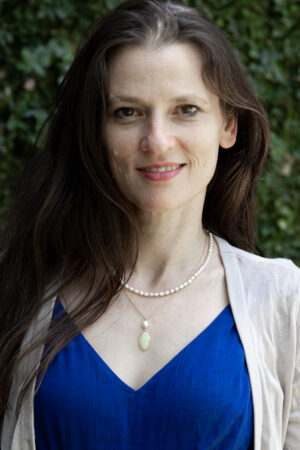
UN 16 Days of Activism: Day 6 – Barbara Thiede

I teach full-time in the Department of Religious Studies at the University of North Carolina Charlotte and serve as the Program Director for our department’s graduate program. I am also an ordained rabbi and teach for ALEPH – Alliance for Jewish Renewal.

In both settings, I teach a range of courses focused on gender, power, class, and race. These fall, broadly, into two categories. As a historian of Jewish history, I teach the history of European antisemitism and the marketing of the Holocaust. As a biblical scholar, I teach a wide range of courses that focus on gender, power, and violence in the Hebrew Bible. I am currently writing a full-length monograph entitled Male Friendship, Homosociality and Women in the Hebrew Bible. I am also working on a volume for the Routledge series “Rape Culture, Religion and the Bible” entitled Rape in the House of David: A Company of Men.

Writing about causes I support has been a significant part of my activism in public realms, too. For some twenty years I wrote for a regional section of The Charlotte Observer as well as for the Observer’s Viewpoint page as a community editorial columnist. Here, I was able to address a range of issues, from domestic violence and sexual assault to antisemitism and racism. Likewise, my blog, Adrenalinedrash, includes writing on sexual violence, racism, and antisemitism from a rabbinic perspective.

From my earliest days at UNC Charlotte, when I created the first women’s group for addressing eating disorders, to my campus involvement today in our annual Sex Week, addressing the very real concerns of my students has been one of my primary goals. One in every four of my female students will be the victim of sexual assault during their undergraduate careers. While teachers of Religious Studies regularly engage with class, gender, race, sexuality, and ability, classroom conversations are often detached from the rape culture that surrounds them. But the rape culture of the Hebrew Bible is familiar to my students for a reason; like today’s rape cultures, it relies on a web of male friendships, alliances, and social relationships that are essential to its preservation. In the classroom we can analyze how hegemonic masculinity that supports rape culture works both in ancient texts and in contemporary settings. And we can talk about what must be done to change the statistics and make college campuses safe for women.

Though I am involved with efforts to combat racism and gun violence as a speaker and rabbi, much of my activism has centered on working with local church and civic groups. For almost two decades, I have regularly addressed sexual violence and hegemonic masculinity in the Hebrew Bible in a wide range of denominational settings. Because biblical authors present sexual violence against women as permissible, we need to interrogate the texts we hold sacred.

I participate in marches and rallies and speak for a host of causes I support – from protecting voting rights to winning citizenship for undocumented immigrants to saving our broken planet. And I have found that my greatest impact takes place in classroom, faith, and community education. There, I can develop relationships, open doors, unpack a conversation, and empower those I am working with – from the eighteen-year-old college students to eighty-year-old grandmothers. We are all needed in the struggle against rape culture.

Between now and the 16 days I will be helping students at UNCC with the organization of this year’s Sex Week (sexual violence is a key topic), writing a piece for my blog on the male alliances that support rape culture in both the Hebrew Bible and our own time, and working with a full class of students who are writing their final papers – almost all of which center on sexual violence in Hebrew Bible. Teaching in two different academic settings, spending many Sunday mornings with faith groups, and writing offer me opportunities to address and confront the rape cultures we must combat and eradicate. And in our time.

read more

UN 16 Days of Activism: Day 5 – Al McFadyen

Tell us about yourself: who are you and what do you do?

My name is Al McFadyen. I am a senior lecturer in systematic theology at the University of Leeds. In my academic work, I write (and teach) mainly around themes related to theological anthropology – which is to say, Christian understanding of humanity. I am especially drawn towards those often complex and ambiguous situations where humanity is threatened, vulnerable, at risk or somehow in question and so drawn therefore also to institutionalised practices that attempt to engage human beings in difficulty, often equally ambiguous and complex. I have always felt the need to ground my academic work and understanding by working also in non-academic contexts alongside the university (psychiatric nursing; suicide counselling; youth work; policing) in a kind of triangulation between academy, church and the diverse ways of living out humanity in the ‘real world’.  In this triangulation, I am hoping to find mutually enriched understanding and wisdom about what it means to be human in situations where humanity itself is at some risk. To put that theologically, I am trying to work out what it means (and why it might be worth trying) to speak of Christian faith, of sin and salvation, of good news, in situations such of human vulnerability.


How does your research or your work connect to activism?

I am hesitant to describe the sorts of things I do under the heading of activism. And I suspect others will be too, since what I do looks very different from the range of involvements that generally go under that heading. I spend on average over 60 hours a month working as a frontline police officer (unpaid), often working single crewed answering emergency calls; calls that take me to places where often someone is or has been made vulnerable, and sometimes where I will act in ways that also make someone vulnerable by using force against them or depriving them of their liberty in order to bring them to justice. I appreciate working in the police might be regarded as the opposite of what activism might mean. However, policing in the UK is one of the places where you will find institutionalised practices and nuanced understanding of some of the concerns that motivate many activists: gender-based violence; the cultures and processes that aid the creation, maintenance and exploitation of gendered vulnerabilities; hate crime, including those based on racism and homophobia; human trafficking; child sexual exploitation; community cohesion; the precarity of asylum seekers; radicalisation (including white right wing), violent extremism and terrorism (Leeds is where the 7/7 bombs were made, a short walk from the University).

I first wrote extensively on child sexual abuse almost 20 years ago (in my book, Bound to Sin), before I joined the police. Working in the police has both developed and further grounded my understanding of these and other situations where humanity is at risk. These have included work (not all of it published) on counter-terrorism; faith-based community engagement; street grooming for sexual exploitation; loving enemies & loving the neighbourhood. Most recently, I have written on the just introduced offence of coercive control, which is to appear in a book that has grown out of Shiloh-related work: namely, the ‘Feminism and Trauma Theology’ project. My contribution has the title, ‘”I Breathe him in with Every Breath I Take”: Framing Domestic Victimisation as Trauma and Coercive Control in Feminist Trauma Theologies’ and it will be published in February in Karen O’Donnell & Katie Cross (eds), Feminist Trauma Theologies.

Why is activism important to you and what do you hope to achieve between now and the 16 Days of 2020?

Organisations like the police effect change for people in often incomplete, messy and ambiguous ways and sometimes can’t do much more than stave off the immediate risk and crisis or create a space where a victim and offender might make decisions that could have positive life-changing consequences. I suppose I am committed to the ideas that much valuable humanizing transformation happens like that and at that small, face-to-face human scale. It’s not a scale that is always taken with appropriate seriousness by academics or policy makers and maybe also not always by activists. (Nor are the fallible, all too human institutions that we have available to make change or to support the conditions that enable human flourishing become reality.) And I am afraid neither are the people – extraordinary in their ordinariness – that work in those institutions – nurses; bobbies; firefighters; paramedics; council staff – making neighbourhoods work as places that might be habitable spaces for flourishing human diversity. We need somehow to help students gain a sense of the importance of commitment to and working in and with such institutions, alongside the importance of more abstract ideas and values that can shape policy and more conventional notions of activism.

What I hope to achieve between now and the next 16 days of activism in 2020 is similarly scaled. I hope I can make a difference to some of the people I will deal with. I hope that I won’t mess up, especially by failing to identify and assess risk appropriately. Domestic incidents are the ones where the difference between an incident that seems superficially to be trivial and one that will prove fatal in absence of decisive intervention is not always clear. They are also amongst the most volatile and unpredictable. So, I also hope that I don’t get seriously injured. Since the last 16 days, I have been assaulted several times on duty, though without anything more than a very minor injury.

But I also hope to do some further work and thinking reflecting theologically on policing, including domestic violence.

read more

UN 16 Days of Activism: Day 3 – Nancy Tan

I’m Nancy Tan – the one in the salmon pink shirt. This picture was taken last month at a retreat for the female pastoral staff and I gave a talk on “Interpreting the Bible: from Feminist and Masculinities Perspectives”. It was an overnight retreat for the sisters to relax from their busy schedule at church and to encourage and empower each other.  Each of the sisters in this picture are activists: actively protecting the rights of the marginalised, oppressed, harassed and frightened people living in HK now – from victims of abuse to the asylum seekers. I am very honoured to be in this picture!

I am currently an Associate Professor in Hebrew Bible at Divinity School of Chung Chi College, the Chinese University of Hong Kong. I teach courses related to the Hebrew Bible, and also Gender Critical Interpretation of the Bible and Contextual Interpretation of the Bible. Through these courses, and some of my current research interest and work, I hope to challenge conventional interpretations that propagate the suppression and denial of the rights and self-esteem of women and some men in the Bible and especially today.

 I am now working on a book entitled Resisting Rape Culture: The Hebrew Bible and Hong Kong Sex Workers with the Routledge series on Rape Culture, Religion and the Bible. I have been working on a project reading Bible passages that mention sex workers with the sex workers in Hong Kong. This book is part of the output of some of the readings.

 Activism is an inherent component to negotiate issues of injustice. It is the only avenue to raise the awareness and consciousness of the public the stories of injustices suffered by the society. It compels the public to make ethical judgments. From now until the 16 days of 2020, I hope to complete the book I have mentioned above, get it published and also promote it. I hope this small token could become part of the larger on-going efforts to instill respect for sex workers in more people, and also to eliminate rape culture in our society.

read more

UN 16 Days of Activism: Day 2 – Gordon Lynch

Tell us about yourself: who are you and what do you do?

I currently work as the Michael Ramsey Professor of Modern Theology at the University of Kent. I’ve been an academic at different universities for nearly twenty-five years now (that time’s gone very quickly…!) and over that time my work has crossed over a number of disciplines including sociology, history and practical theology.

Although my research has been on quite an eclectic set of issues, a fundamental interest I’ve had through this work is on what values shape people’s lives and the role that moral meanings play in society. Over the past eight years, I’ve become increasingly interested in issues of historic abuse, particularly in how abuse took place in welfare initiatives that were ostensibly seen as morally defensible in the past. Part of what I’ve learned through that process is to recognise how welfare interventions like the industrial school system in Ireland or native residential boarding schools in Canada weren’t necessarily seen as morally unproblematic in the past, but that these systems carried on for a range of reasons despite knowledge of their failings. Recognising this is important. Sometimes organisations look at histories of institutional abuse in their work and argue that this took place in the context of well-intentioned initiatives that were simply less enlightened than today’s standards. The reality is often more complex and more uncomfortable than that.

Over the past seven years, I’ve become increasingly involved in researching the history of British child migration schemes that sent around 100,000 children to other parts of the British Empire and Commonwealth between 1869 and 1970. These schemes were often funded by British and overseas governments, but run by leading charities and major churches. I’m particularly interested in the schemes which operated in the post-war period which ran increasingly against the grain of progressive child-care thinking of that time, and in understanding the institutional and policy factors which made that possible.

How does your research or your work connect to activism?
I’m really interested in how we can take academic research on institutional abuse and make it accessible to different public audiences. I’ve been lucky enough to have been involved in a number of projects along these lines. In 2014, I worked with researchers in Ireland and the digital channel TrueTube to put together a film on women’s experiences of life in Magdalene Laundries in Ireland. I’ve co-curated a national exhibition about the history of British child migration at the V&A Museum of Childhood, and learned a lot through that about how objects and images can be presented in ways that make people more aware of complex and emotionally difficult histories. As a spin-off project from that exhibition, I was able to work with the production company 7digital to commission a number of leading British folk musicians who created a collection of songs, ‘The Ballads of Child Migration’ which has been released as an album and been performed at different venues around the country. I see part of this work – particularly in relation to the child migration schemes – as raising awareness of a history that’s not always well known. Another part of that is trying to think about what the factors are that give rise to institutional abuse, some of which might still be relevant today.

More recently I’ve become involved in supporting the work of two national child abuse Inquiries which have looked at the historic abuse of British child migrants as an expert witness. Working with another colleague, Stephen Constantine, we spent most of a year doing archival research that informed the report on British child migration by the Independent Inquiry into Child Sexual Abuse. I learned more through that work about how historical research can go beyond just providing context for public investigations into historic abuse to develop more forensic analysis of archival sources which helps to show how and why systems of care failed. By looking at organisational correspondence and reports in Britain and Australia, for example, it was possible to piece together how the British Government had failed to put proper safeguards in place to ensure that standards of care for British child migrants were adequate.

Why is activism important to you and what do you hope to achieve between now and the 16 Days of 2020?

I came from a non-traditional background as a student and am always conscious – despite the pressures of modern academic life – of the considerable resources we still have in our universities. I’ve always thought that our research should be put to the service of wider communities and that this work should feed back into how we think our academic disciplines should be cultivated and taught.

I’ve been working with the Scottish Child Abuse Inquiry over the past year and the work I’ve done with them is going to come into the public domain next spring (so can’t talk about it much yet, unfortunately!) – but I hope that will take forward a bit further some of our understanding of the circumstances in which British child migrants were abused. I think there’s a growing critical mass of people doing very important work on religion and abuse across a range of settings and I want to continue to think about how I can best support that. I’m also going to start publishing work more specifically on historic abuse of child migrants sent overseas by the Catholic Church and (hopefully) the Church of England which will hopefully be available over the next year. More ideas are the pipeline as well…

read more

International Day for the Elimination of Violence Against Women – UN 16 Days of Activism: Day 1 – Ericka Dunbar

To celebrate the first day of the 16 Days of Activism Campaign, which coincides with International Day for the Elimination of Violence Against Women, we spotlight activist Ericka Dunbar. You can learn more about Ericka’s work here.
————————————

I am Ericka Dunbar, a Ph.D. student at Drew University, completing my studies in the area of Bible & Cultures. My focus is the Hebrew Bible/Old Testament. My dissertation is entitled: “Trafficking Hadassah: An Africana Reading of Collective Trauma, Memory and Identity in the Book of Esther.”

My research connects to activism in several ways. Foremost, in my research, I utilize intersectionality and polyvocality as frameworks that enable me to expand traditional interpretations of biblical texts. The application of these frameworks illuminates the ways that Africana girls and women often experience intersectional oppression at the hands of patriarchs and colonial entities. For example, both Hagar in the book of Genesis and the virgin girls from Ethiopia and other African locales in the book of Esther, are taken from their native lands and sexually exploited by patriarchs and colonial subjects.

When reading the narratives intertextually, systematic oppression of Africana females due to intersectional identities becomes evident. Africana girls and women are sexually exploited at the intersections of ethnicity, gender, class, and in relation to interlocking systems of power and domination by patriarchs and colonial subjects. In these texts, ideologies of Africana inferiority are promoted and social hierarchies are created, frequently relegating Africana females low on the hierarchy (as concubines and slaves). Both the ideologies and hierarchy function to justify the abuse and oppression of Africana females.  Consequently, Africana girls and women become sex slaves to patriarchs and kings that extract their bodies from their natal homes and transport them to other locales for the patriarch/king’s sexual pleasure.

In addition, the application of these frameworks provides an opportunity to integrate the voices and experiences of Africana girls and women regularly ignored or minimized by interpreters, namely the nameless virgin girls in the book of Esther. This type of activism resonates with the type of activism reflected in the #SayHerName movement.

#SayHerName raises awareness of the countless Black girls and women that are victimized by police and anti-Black racialized violence. It centers the stories of those whose experiences of police and racialized violence are muted in both historical and media representations.  My work parallels this movement in that I give voice to the often overlooked and ignored experiences and traumatization of Africana girls and women in the ancient biblical contexts. However, not only do I focus on Africana girls and women in ancient contexts but I also illustrate how the girls’ and women’s experiences in the biblical narratives resonate with the experiences of Africana girls and women trafficked and rendered sex slaves during the transatlantic slave trade and even into the present.

While, the #SayHerName movement focuses on Africana girls and women that are killed by police in the US, I focus on sexualized violence perpetrated against Africana girls and women. I also emphasize that Africana girls and women were recognized as property of colonies in ancient contexts and during the slave trade. Therefore, they received no legal protection from rape and sexual enslavement. I point out these facts as a means of highlighting that current police brutality against Africana females is a legacy of patriarchy and colonial domination. In addition, the failure of law enforcement and legal systems adequately to protect Africana victims from sexual exploitation or to punish offenders is in large part a horrendous legacy of racist stereotyping and colonialism.

Perhaps some contemporary examples of the sexual exploitation of Africana females will illuminate the types of injustice that advocates such as myself are speaking out about. Three women, Cyntoia Brown, Chrystal Kizer, and Alexis Martin who were trafficked and sexually exploited in the USA as minors, either have been or are being prosecuted for defending themselves against their traffickers. The forfeiture of protection by police and legal systems is another form of violent brutality. Moreover, the lack of protection from an abuser and the criminalization of victims exacerbate their suffering.  Girls and women should not be criminalized for protecting themselves or escaping abusive exploitation. Therefore, I not only emphasize intersectional oppression and elucidate damaging ideologies but I also critique systemic oppression and the failure of legal entities to uphold justice and protect vulnerable persons.

Secondly, I teach with an emphasis on trauma and social justice. It is essential for me to prepare students for the world and ministry by shaping lives that are committed to not only critical thinking but to justice as well. When I help students to recognize inequalities and trauma in the ancient world of the text and in our very own contexts, we create conscientious communities that are responsive to discriminations and disparities. As co-learners, we help each other recognize the mechanisms of power and how power can be used to transform systems and conditions to ensure justice and equity for all members of society.

One way that we promote equity and justice is by creating a space that affirms the humanity and dignity of all. We allow diverse knowledge, experiences, and interpretations to enhance the learning space and we respond to critical issues that impact humans globally. I find that in addition to contextualized learning, interdisciplinarity is a great asset for social analysis, promoting critical thinking, and interpreting information to discern solutions. Moreover, we discuss and respond to these issues both inside and outside of the classroom. Practices that demonstrate an orientation to social justice include a trip to the Civil Rights Museum, activism through social media engagement, involvement in protests/rallies/marches/voter registration drives, implementing and organizing church programming to address social issues, and/or involvement in organizations that create/impact legislation. There are a wide range of practices that our learning community engage in as a means of embodying our scholar-activist identities. We supplement book-knowledge with experiential knowledge to produce changes in the communities in which we serve.

Alongside teaching at Spelman College and the Interdenominational Theological Center, I serve as a representative on the Joint Action for Advocacy for Justice and Peace Convening Table, National Council of Churches (USA), and on the faculty team for the Samuel DeWitt Proctor’s Dale Andrews Freedom Seminary hosted by the Children’s Defense Fund. The seminary course is an immersion experience for seminarians who desire to engage and cultivate prophetic voices with communities that contend against systemic injustices that directly impact children and youth. Scholars, community and church leaders, and activists gather at this week-long Institute to describe and model non-violent direct organization and collective action for justice though public theology, communal, and congregational praxis.  This past summer, I took two of my former Spelman students to the institute and transported two others from Candler School of Theology at Emory. I’ve taught students at Spelman that participated in other CDF programming as well. I have become a mentor beyond the classroom to many of these students and to other students that I’ve met through the Forum for Theological Exploration. These relationships are meaningful to me because of our relatedness as Africana women and our shared focus on child advocacy and on challenging sexualized violence against Africana women in ecclesiastical structures and society.

In late October, a Clark Atlanta University (Atlanta, USA) student by the name of Alexis Crawford was sexually assaulted by her roommate’s boyfriend and then allegedly murdered by her roommate and the roommate’s boyfriend. This atrocious event shook the Clark Atlanta community as well as the members of the other schools of the Atlanta University consortium, (two of which I serve as an adjunct professor) and the wider community surrounding these institutions. Specifically, the students in my Intro to Old Testament class at Spelman were traumatized by this killing because of the sheer callousness of Alexis’s abuse, their proximity to Alexis’s apartment and school, the failure of legal entities to protect Alexis, and because many have expressed experiencing similar instances of unsolicited sexual advances in their lifetimes. This killing illuminated for us that our scholarship is not divorced from the world around us. Rather, our scholarship is informed and impacted by the communities and societies that surround us. This semester, it has become increasingly clear that there is an exchange between the theories we engage in the classroom and our lived experiences beyond the classroom. In the last couple of class sessions since Alexis went missing and was found murdered, my students have been reflecting upon experiences of trauma and assessing how the educational processes we’ve engaged in this semester continue to aid in our ability to identify and challenge social injustices in practical ways.

Besides writing, teaching, and mentoring, I also travel and present papers on sexual trafficking and collective trauma at international conferences. Two of my papers/presentations are being turned into an article and book chapter and published in the next couple of months. Last summer, I presented a paper entitled, “For Such a Time as This #UsToo: Representations of Sexual Trafficking, Collective Trauma and Horror in the Book of Esther,” delivered at the 2018 Religion and Rape Culture Conference at the University of Sheffield (Sheffield, England). This paper has been turned into an article and is being published in a special edition of the journal Bible and Critical Theory. This past summer, I presented a keynote paper entitled “Sisters of the Soil: Surviving Collective, Cultural Traumatization: Intertextualities Between Hagar, the Ethiopian Virgin Girls in the Book of Esther and Mother Africa,” at the Circle of Concerned African Women Theologians 5thPan-African Conference (Celebrating the 30thAnniversary of the Circle) at the University of Botswana (Gaborone, Botswana). An excerpt of this paper was translated into German and published in FAMA (Switzerland). The longer keynote paper will be published as a chapter in a book entitled Mother Earth, Postcolonial and Liberation Theologies by Lexington Publishers.

Activism is important to me because it galvanizes persons to participate in collective action to ensure every member of society is treated fairly and equitably. Activism and advocacy are means to inspire and create change. Students are capable of effecting social change thus it is important to reflect on and engage in advocacy and activism within and outside of the classroom. During the 16 Days of Activism I will continue to educate persons about the mechanisms of sex trafficking and its psychological, emotional, and physical impacts on Africana girls and women. I intend to tell the stories of girls and women whose lives have been impacted by sexualized violence as a means of increasing awareness of gender-based violence and to prevent and end sexualized violence against girls and women. I also hope that any efforts to decriminalize the sexual exploitation and trafficking of person will be thwarted.

read more

#MeToo 2 Years On: What Have We Learnt – Event at St Paul’s Cathedral, 19 November

Shiloh Project co-director Katie Edwards (University of Sheffield) will speak at this event, reflecting on the #MeToo movement, at St Paul’s Cathedral later this month. Booking details can be found here.

Two years on from #MeToo – what have we learnt?

Tuesday 19th November 2019, 6:30pm-8pm
OBE Chapel, St Paul’s Cathedral, St Paul’s Churchyard, London, EC4M 8AD

It’s two years since the world was rocked by allegations about high-profile men harassing women, who often felt they had to stay silent in order to keep their jobs. As the social media storm grew, more and more stories emerged from around the world and in every workplace sector. Women at all levels of working life had experienced discrimination, sexualised behaviour, and abuse. Has anything changed since then?

This event will reflect on the last two years: the nature of debate, the experiences of women and men, and the consequences for working life.

Speakers include:

  • Sarah Churchman OBE, Chief Inclusion, Community & Wellbeing Officer, PwC
  • Ayesha Hazarika, journalist and political commentator
  • Dr Katie Edwards, University of Sheffield
  • Sarah Whitehouse QC, Senior Treasury Counsel, 6KBW

The entrance for this event will be the Crypt Door. If you have any accessibility needs please let us know by emailing: [email protected]

This event is open to all who wish to attend and is free of charge. However, we would welcome a donation (we suggest £5-£10) to help cover the running costs from anyone who wishes to make it.

read more

Rape Culture, Religion and the Bible Book Series: Inaugural Volume Out Soon!

We’re delighted to launch the inaugural volume of our book series with Routledge Focus.

Rape Myths, the Bible and #MeToo by Shiloh Project co-director Johanna Stiebert (University of Leeds) will be available in all good bookshops from 5 November.


We’ll be celebrating its publication with a launch event at The University of Sheffield on Friday 20 December 4-7pm G11 – Workroom 2, 38 Mappin Sheffield.

Talks from Johanna Stiebert and Dr Mmapula Kebaneilwe (University of Botswana) will be followed by a wine reception and seasonal buffet.

If you would like to join us, book your tickets here.

If you would like to submit a proposal to the series editors for consideration, contact us at [email protected]

We look forward to reading your ideas!

read more

Rape Culture and Religious Studies: Book Review by Rabbi Dr. Barbara Thiede

The recently published book Rape Culture and Religious Studies:Critical and Pedagogical Engagements is edited by (Shiloh contributor) Rhiannon Graybill, Meredith Minister, and Beatrice Lawrence. This review is by Barbara Thiede, Department of Religious Studies, UNC Charlotte.

Rape Culture and Religious Studies is an important book for all Shiloh Project supporters. Please order copies for your courses and libraries! More details can be found here.

Rape Culture and Religious Studies

Edited by Rhiannon Graybill, Meredith Minister, and Beatrice Lawrence

Lanham, Maryland: Lexington Books, 2019 (vii + 207 pages, ISBN 978-1-4985-6284-3, $95.00)

Once the #MeToo movement was taken up by celebrity (and white) victims of sexual harassment and assault, it sparked a public conversation that spread across the globe. A wide range of media outlets offered venues for personal disclosures, painful discussions, and, it was hoped, increased awareness of the rape cultures women are forced to navigate every day.

Religious studies teachers, in the meantime, continued to address sexual violence in the texts and traditions they studied. And yet: conversations in Religious Studies classes, that so often focus on class and race, gender and sexuality, sexual violence and abuse, seemed detached from the rape cultures that (literally) surround students and teachers alike.

In their co-edited volume, Rape Culture and Religious Studies, editors Rhiannon Graybill, Meredith Minister, and Beatrice Lawrence put the question: how do religious texts and traditions that justify, support, and maintain sexual violence intersect with contemporary rape culture?

The volume contains an introduction and nine essays. It includes studies that treat Christian, Jewish, Muslim, and Hindu traditions. Topics are wide-ranging. T. Nicole Goulet, for example, assesses the place and power of recently emerging “sacred literature” in the discussion of sexual violence and rape culture. Her discussion of Priya’s Shakti, a comic book that emerged after the gang rape and death of Jyoti Singh Pandey in 2012, describes how the comic revived Hindu practices while urging women to “speak without shame.” Goulet notes that while the comic does not critique existing power structures, the women it invites to speak have done so. Goulet’s essay demonstrates: there are significant intersections between religious tradition and contemporary rape culture.

Other essays provide similar insight, sometimes with surprising effect. Minenhle Nomalungelo Khumalo asks what happens when we read the biblical gang rape and death of the Levite’s Concubine in Judges 19 as a rape fantasy, one which can be profitably compared with non-consensual pornography. Kirsten Boles explores the way #MosqueMeToo can be situated when #MeToo adherents engage in racializing sexual violence; such as when Islam is accused of inherent misogyny and Muslim women are depicted as needing to be saved from violent brown men by Western (white) feminists. Meredith Minister offers a trenchant critique of the fetishizing of consent to counter rape culture. In her essay, she makes clear why consent, too, is an instrument of power. Rhiannon Graybill explains why analyzing rape culture demands more nuanced approaches to issues of harm, describing the relationship between race, sexual violence and colonialist visions of women as victims. She also points out that the Religious Studies classroom which addresses rape culture must deal with the ambiguities sex and sexual pleasure introduce to the discussion.

Some essays disappoint. Susanne Scholz’s essay on what she calls “cop-out hermeneutics” not only fails to offer new or innovative insights, it also deploys language about students that seems potentially flippant (“students may shed tears” when asked to relinquish “privatized, personalized and sentimentalized” biblical meaning). Teachers in Religious Studies classrooms can aim to ensure that their students feel safe when they are introduced to academic analysis of their religious traditions. No one benefits from internal eye-rolling or dismissive responses to this challenge.

But other essays in this volume provide models for Religious Studies teachers, like the essay by Gwynn Kessler, which demonstrates deep pedagogical self-reflection. Kessler also offers a model lesson plan that layers Deuteronomist texts on genocide, slavery, and rape and consciously brings those texts into conversation with contemporary manifestations of violence and sexual abuse. She walks the reader through her lesson plan, providing a fine example of thoughtful pedagogy for teaching texts of terror.

When I teach texts of sexual violence in the Hebrew Bible, I know that one – or more – students in my classroom will likely self-disclose in some way; rape victims are among my students. Rape Culture and Religious Studies acknowledges that survivors sit in our classrooms and that many come from religious traditions that promote or, at least, make a home for sexual violence.

Religious Studies teachers and their students live and work on campuses where rape culture is normalized. Today, teachers of religious traditions and sacred texts cannot afford a pedagogy that examines sexual violence of the past and simultaneously shuts out the rape culture of the present. Religious Studies teachers should read Rape Culture and Religious Studies. It will help us begin the work of exploring, analyzing, and exposing the intersections of religion and rape culture. That, too, is our work.

Barbara Thiede, Department of Religious Studies, UNC Charlotte


read more

An Introduction to the Institute of Women in Religion and Culture, Accra, Ghana

At the recent gathering of the Circle of Concerned African Women Theologians, convened at the University of Botswana from 2 to 5 July, Shiloh co-directors Katie Edwards and Johanna Stiebert met up again with Joyce Boham. Joyce is manager of the Institute of Women in Religion and Culture, which is attached to the Trinity Theological Seminary in Legon, Accra. Both the Circle and the Institute were founded by Mercy Amba Oduyoye who has recently retired as Institute manager. 

The Institute is also called the Talitha Qumi Centre, a name which recalls the (Aramaic) words spoken by Jesus to the daughter of Jairus whom he raised from the dead (see Mark 5:21-43). Talitha Qumi means “little girl, arise!” and is an apt name for the Institute, which in a number of ways works with seminarians, academics, and members of grassroots communities to improve the lives of women and girls in Ghana. 

What follows is an account of the Institute and its work by Joyce Boham.

African women academics are increasingly involved in intellectual discussions in their disciplinary areas, yet in the humanities they continue barely to be heard. ‘The Circle of Concerned African Women Theologians’ was founded to encourage and promote African women theologians to make their ideas, insights and writings available within and beyond continental borders. As such, the Circle serves as a platform for disseminating African women’s research on religion and culture, focusing primarily on Africa’s rich store of indigenous religions, cultures and popular religious movements. Nurtured by the Circle, members from across the continent have begun to write about themselves and about their understanding of and reflections on religious and cultural issues and how these affect them and their communities. The publications by members over the past thirty years since the Circle’s foundation have brought immense benefit to academics and students interested in African women’s perspectives on religion and culture. They have also made the international academic discourse on such topics more inclusive and more comprehensive. 

The Institute of Women in Religion and Culture (hereafter known as the Institute) is a project started in 1999 by the Circle’s Ghana chapter and led by Mercy Amba Oduyoye. One of its founding principles is to disseminate the writings of the Circle to women in grassroots communities. A leading pioneer of African women theologies, Mercy Amba Oduyoye is sowing the seeds for a harvest of peoples attuned to gender sensitivity and gender justice in the religio-cultural space of Ghana. At the Institute we examine what religion and culture mean to the lives of Ghanaian women. Our focus is on the “Way-forward” – or, on how to move from the difficulties and problems of the present towards a better future of justice that honours the humanity of women. 

The Institute focuses on areas including but not limited to: 

  1. The challenges single women face in bringing up their children in the absence of fathers.  

The roots of this issue lie in long-entrenched patriarchal family systems, where fathers are regarded as the heads of families with primary authority over all other members. The absence of fathers (for whatever reason) creates difficulties for women who have to be both father and mother at the same time – but in a context where their status and authority are low, including, often, in the eyes of their own sons who may not accept maternal authority on account of wider social pressures that undermine it. 

  1. Violence against women perpetrated and perpetuated through rape culture, including the use of language in lyrics, proverbs and common sayings. 

To give one example, there is a saying that goes: “even if a woman is brave enough to use the gun, the gun rests in her husband’s house.” What this transmits is that irrespective of how brave a woman is, she is still under the authority of her husband. There is, therefore, no need for a woman to be brave or independent – being a woman is enough to curtail her opportunities.  

  1. Violence against women and girls connected to cultural practices. 

These practices include, for example, trokosi: a practice where a virgin girl is sent to live with a fetish priest to serve him in whatever way he deems fit in order to atone for the crimes of older members of the girl’s family.

  1. Women living with HIV and AIDS and their families.
  1. Marriage, focusing on the marrying of under-age girls. 

While the legal age of maturity and marriage in Ghana is 18, forced and under-age marriage still take place.

  1. Trafficking of persons, especially women and children.
  1. Current or arising challenges.

We ran special seminars on peace and conflict resolution during the election season, because elections in Ghana are often marred by violence. One reason is that politicians sometimes incite youths, known as ‘foot soldiers’ (who are disproportionately from under-privileged communities) to riot and disrupt elections, which has led to clashes with police, injuries and fatalities. The Institute, in partnership with the Electoral Commission, called out to women before the elections, educating them on how letting their sons and daughters be used as foot soldiers is exploitative and has harmful consequences for their children, their communities and the country as a whole. This public education campaign contributed immensely to the relatively peaceful elections of 2016. The Institute also held a vigil and prayer meeting following the spate of ritual murders of women before and during elections.

The Institute has produced publications based on discussions on all of these focus topics. These booklets are available to students of religion of the Trinity Theological Seminary, as well as to students of other universities in Ghana. In this way, engagement with how religion impacts on topical issues becomes a resource for purposeful scholarship and for collective problem-solving.

I have worked with Mercy Amba Oduyoye for the past twenty years, first as the liaison officer for the Circle and later as programme manager for the Institute. Following Mercy’s retirement, I am now manager of the Institute. The Institute is now entering a new phase, with Mercy’s blessing and oversight.

I am planning a number of public events at the Institute, which will bring together students, academics and members of the community. One of these, which may be of particular interest to those who study and seek to detoxify rape culture, will focus on the effects of language, in particular popular sayings, proverbs and songs, in terms of how women are depicted and portrayed. For instance, we have saying – onoo na wo pea kofa, ankaa abirikoo naso afede yetino bushe. The saying translates as, “if that is what you want, you can take it. The orange is eaten ripe, but we want it green”. We would like to discuss such a saying in group seminars to probe what it transmits and how acceptable and accepted people find it. We want to ask, “whom does the orange represent?”, “is it okay to take what you want?”, “what does it mean to refer to a person as ‘ripe’ or ‘green’?”, “if this is about women, how are women depicted in this saying?”, “is this acceptable?”, “if not, what needs to be done to change and how can we be the change we want to see?”

We also want to discuss together ideas about marriage. For instance, what does it mean to say “she has gone to her husband’s house”? How do we understand the dynamics between men and women? Should women keep their opinions to themselves, because they live in their husbands’ homes and not their own homes? How do such sayings unconsciously affect women’s attitudes to their roles, identities and homes?

Our aim in these discussions and with our other events at the Institute is to create safety nets, especially for women. Many young women and girls migrate to Accra where our Institute is located from the northern regions of Ghana. Often they are escaping forced marriages or poverty. But life in the capital city is also fraught with difficulties. It can be difficult, for instance, to find a safe place to wash, or sleep, and that can make them and their children vulnerable to rape and other forms of violence and exploitation. The Institute seeks to work with women who hold some authority and power (such as queen mothers and traditional women leaders), alongside the Department of Social Welfare, NGOs and politicians, to find ways forward to keep these women and girls safe and help them towards lives with opportunities and prospects. 

Another area of the Institute’s attention is to initiate practical strategies that advance the wellbeing of women in rural areas. Sometimes these strategies can be narrowly targeted but make a significant difference. To give an example: in some rural communities in Ghana cultural norms persist that forbid girls who are menstruating from crossing rivers. Unfortunately, when community schools are located over the river, this means that menstruating girls cannot attend school for a significant timespan each month. The Institute offers public education focused on this practice, among others. Education can empower and include girls and work against the stigma associating menstruation with pollution.

The topic of women’s health more generally is an area requiring more action. The Institute seeks in the future to foster public education on early cancer diagnosis, STD prevention and treatment, as well as on other illnesses and conditions that affect women. Reproductive health, broadly defined and including negotiating consent and sex, spacing children and safe sex, is another significant area for more work. This needs to be done in conjunction with education on proper nutrition, regular exercise and maintaining good mental health. These are programmes the Institute hopes to develop. 

 The Institute, while focused primarily on the concerns of women in Ghana, also organizes educational tours for religious studies students from outside Ghana, especially those who may want African women theologians’ perspectives on issues related to religion and culture. 

We also provide workshops and resources for students of religion and theology that focus on the role and significance of gender in ministry. 

Our elders say it is easy to break a broom stick but impossible to break a bundle of brooms. Together we can create a strong and just future. This is our call for partners. Come join us and shape our generation.

read more
1 3 4 5 6 7 8
Page 5 of 8