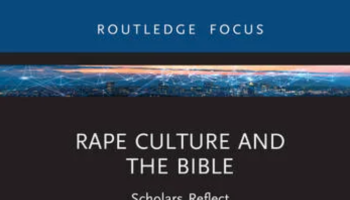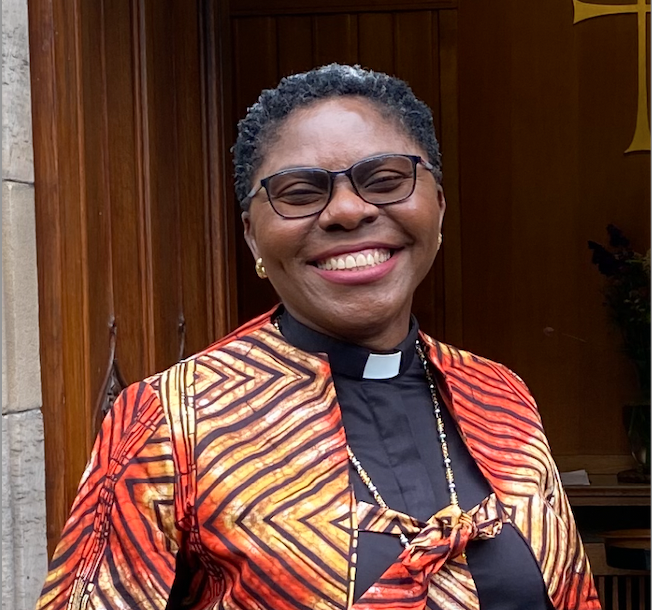
Today’s post is all about Dr Jessie Ini Fubara-Manuel, author of a forthcoming book in the Routledge Focus book series “Rape Culture, Religion and the Bible.” The title is Navigating Disability, HIV, Relationships and Abuse for Christian Women in Nigeria: A Focused Study on Port Harcourt, and the book’s release date is 22 July 2026. We anticipate that it will soon be open access. For purchase and access details, see here. Read on to find out more!
Tell us about yourself
I am an ordained minister, researcher, author, and advocate for gender justice and disability inclusion across pastoral ministry, theological research and teaching, and public engagement. As a theologian, I am deeply committed to how elite theological discourses are being reinterpreted in lived theology, as expressed in issues of relationships, gender, disability, and HIV. I live actively in two worlds. I am currently a Pastoral Assistant at Edinburgh Northwest Kirk Church of Scotland, and an Adjunct Lecturer at Essien Ukpabio Presbyterian Theological College, Itu, Nigeria. I recently accepted a position with Leeds Church Institute as Leeds Churches Theologian and look forward to bringing people together in welcoming spaces where churches can reflect, learn, and grow together in faith and witness.
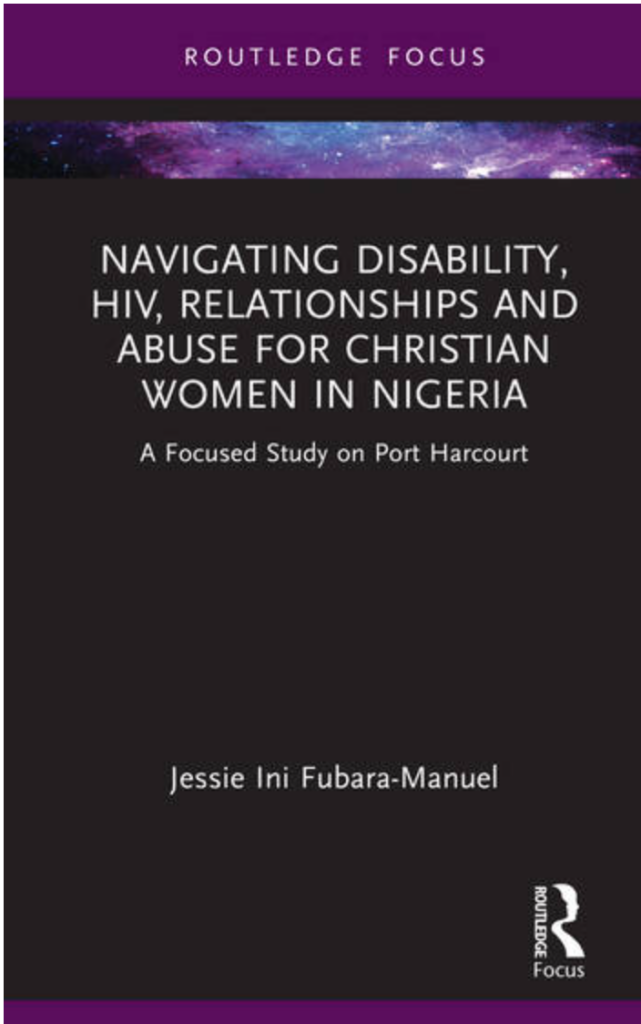
How did this book come about, and how does it relate to your work more broadly?
The United Nations estimates that globally, 1 in every 3 women will experience gender-based violence in their lifetime. This may be conservative. Some reports, including in newspapers and on social media, suggest that 1 in every 2 women face some form of domestic and intimate-partner abuse. I caught several glimpses of accounts of sexual abuse and rape suffered by women with disabilities during my ethnographic PhD research in Port Harcourt. Most disheartening were the stories of women with disabilities who were raped and knowingly infected with HIV by men with whom they shared marital or, at least to begin with, friendly relationships.
My post-doctoral research, consequently, focused on these stories, asking critical questions such as: what were the types of relationships and the circumstances in which rape occurred for these women? (How) did the victim and rapist navigate consent? What were the effects of rape on the health and identities of victims? How did the women make sense of their faith in these challenging situations? How did their gender and disability increase their vulnerability to sexual abuse and rape? What role did patriarchy play in all these?
This book is an effort to bring to the fore the voices and stories of Christian women of Port Harcourt, Nigeria, who, on account of their disabilities, were vulnerable to and harmed by sexual violence and subsequently were infected with HIV. It is the result of my commitment to “speak up for those who cannot speak for themselves” (Proverbs 31:8-9). But it goes beyond mere speaking up; it is about collectively reimagining and creating spaces of justice, respect, love and equality.
What are the key arguments of your book?
Beyond the statistics are actual women for whom rape, HIV+ status and disability are a reality and who face multiple forms of stigmatisation – daily. Whereas gender-based violence affects both men and women as perpetrators and victims, this book supports research that more women are victims of gender-based violence.
Patriarchy enables and entitles men to act in ways that dehumanise and diminish the value of women. I argue that a conversation must be had with men to understand how patriarchy shapes men’s behaviour towards women. Men and women, especially those with disabilities, must have this conversation about gender-based violence in equitable spaces, with respect, theological reflection and genuine love.
Although the significance of faith in the lives of abused women is not always appreciated, faith does inform how Christian women living with both disabilities and HIV+ status make sense of life after abuse and how their identities and relationships are forever impacted. Faith leaders must be adequately trained to offer life-giving, liberating and gender-sensitive theologies to their adherents.
What do you hope readers will take from this book?
That beyond the statistics are faces and lives of everyday ordinary women who suffer various forms of unimaginable abuse, including sexual abuse. Moreover, these statistics often lack women with disabilities because they are very often overlooked and silenced and are unable or unwilling to report rape due to anticipated stigma.
Reporting rape needs community support and accompaniment, whether of friends, family or the church. I hope readers will pause, treat these stories with respect for the survivors and articulate ways to eliminate gender-based violence and the systems that enable rape culture within our societies and churches. I hope there will be intentional accompaniment of women with disabilities and HIV as they navigate what healing means when issues of betrayed trust, rape, infection and loss of relationships take place.
I have taken time to discuss albinism and the fatality of albinism, which is not given the necessary medical attention, and also the myths that engender sexual abuse for women with albinism. I trust this will be a learning point for many people, especially those who never considered albinism – at all, or as a disability. I hope that there will be more awareness of the implications of disability for poverty and inequality to thrive and for stigma to eliminate women from the economic marketplace.
Relationships should be sacred spaces that enable the flourishing of those who engage in them; as such, the simple ethos of protection and love needs to be upheld. Love does not hurt; it does not take advantage of the vulnerable, and it does not deliberately expose one to danger. Sexual assault and rape do not end when the act is past; the trauma of rape stays with the victim for a lifetime, directly and indirectly affecting other relationships.
What makes your book relevant and important
The issues that this book addresses are contemporary, heart-wrenching issues that affect women globally, perhaps worse so in societies where the powers of patriarchy are unchecked. Unfortunately, these issues are far from the stuff of history books. Social media is replete with stories of gender-based violence and rape of women by men in all kinds of different spaces and places. This book brings to the fore the stories of women with disabilities who were infected with HIV – intentionally, deceitfully, abusively. Stories such as these are under-represented and rarely documented.
Port Harcourt is a prominent city in Nigeria, with the reputation of being the oil capital, bringing focus to the fight for resource control, militancy, and patriarchal power; while the negative side-effect of intimate partner violence is most often hidden. Also, the legal frameworks do not adequately protect women with disabilities, and the “indecent exposure” clause can harm women and discredit their reports of rape. These contextual facts must be known to faith actors and other agents as they seek to address rape culture in Port Harcourt.
With efforts to eliminate the scourge of gender-based violence in Nigeria ongoing, this book contributes to that endeavour, advocating for the inclusion of the lived experiences of women with disabilities and HIV. This book also contributes to the Circle of African Women Theologians’ efforts to expose and challenge the structural conditions that enable sexual abuse and rape against women. It does so by grounding women’s experiences in African theological discourse.
Give us one quotation from the book that you think will make readers go and read the rest.
The quote below is a reflection on one of the stories in the book by Lily (pseudonym).
Therefore, it was not an either/or state or sense-making for Lily. She was neitherhappy nor sad, trusting or distrustful, despairing or hopeful. She was in the in-between-ness that was beyond explanation. Rape tarnishes. Sexual abuse is not “just sex” or just of the body; it is a turbulence in the mind that stays on when the body is washed clean of the sperm or blood stains of physical intrusion. When Lily (and, in fact, most of the other women) spoke of her rape, she would unconsciously wrap her arms around herself, like a hug of sorts, consoling the body of the trauma it had endured.
We hope many will read this powerful and important book. For anyone in the Leeds area, Dr. Jessie Ini Fubara-Manuel will be presenting on her research for this book at the Centre for Religion and Public Life (University of Leeds) seminar on 1 October 2026. For details, please contact Johanna ([email protected]).
PS: Another recent book in the series, published earlier this month, is by Christopher Zeichmann, and an earlier book in the series, by Sarojini Nadar, is appearing in paperback on 27 August 2026. For details, see here.