close

New books

The Bible and Violence on Theology & Religion Online

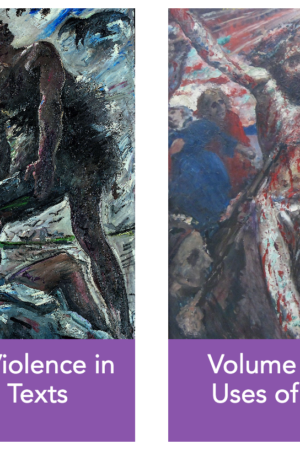
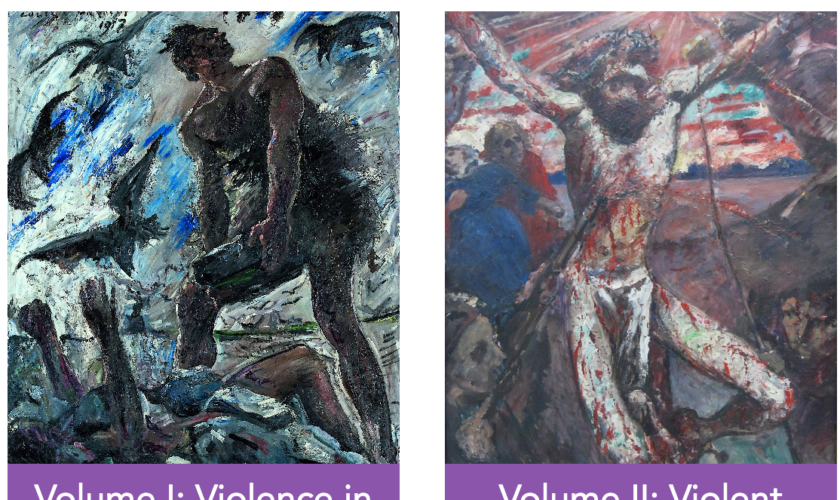
images of book covers showing on the left, a dramatic sky and a figure with a heavy weight alongside another reaching imploringly from the ground and, on the right, a crucifixion scene.

How does violence function in scripture? Who is harmed by particular interpretations? How can responsible reading of the Bible interrupt, rather than perpetuate, harm?

These questions and more are explored in the new landmark major reference work: The Bible and Violence on Bloomsbury’s Theology & Religion Online (TARO) platform. Bringing together over 100 chapters by scholars from around the world, these volumes examine violence in biblical texts and in their use across history and into the present day.
Free-to-read sample chapters

To celebrate the launch and support ongoing classroom discussions and research, several chapters are free to read on TARO’s Topic in Focus page for a limited time, including:

For more chapters, see here: www.theologyandreligiononline.com/featured-content

Many of the chapters in the volumes will hold interest for followers of the Shiloh Project. For a full listing of the Table of Contents, see here. There are chapters covering each of the books in the Hebrew Bible and New Testament, plus chapters on some additional influential texts (Volume 1). There are also chapters on diverse violent uses/applications of biblical texts (Volume 2).

Alongside the open access chapter on rape culture by Grace Smith, listed above, Shiloh readers might be interested in the following (just a sample!):

Violence in Paradise: Reading Genesis 1:1–2:4a from a Samoan Taulima Hermeneutical Perspective (by Arthur Wulf); Nobody Is Safe: Systems of Oppression, Ambiguity and the Use of Violence in Judges (by Katherine Southwood); Grasping the Threshold: A Consideration of Family Violence in Judges 19 (by Amy Kalmanofsky); Violence in the David Narrative: A Divine Order (by Barbara Thiede);  Violence and the Book of Esther (by Katherine Gwyther); Something Baaaaad is Happening in Bethlehem: A Wicked Reading of Violence in the Book of Ruth (by Kimberly D. Russaw); Violence and the Song of Songs (by Laura Quick); Physical and Sexual Violence in Ezekiel (by Emily Allsopp); On Censoring Biblical Narratives of Sexual Violence in the Synagogue (by Tali Artman Partock); Sexual Violence in the Crucifixion of Jesus (by David Tombs); Patriarchal and Colonial Violence in Exegetical Interpretations of the Women in Jesus’s Genealogy (by Sébastien Doane): Physical and Sexual Violence in the Apocrypha/Deuterocanonical Books (by Bailey Freeburn); Violence in the Nag Hammadi Texts: Reading Sexual Violence and Trauma in Nag Hammadi Codex II (by Rikki Wenxin Liu): Reading the Story of Jephthah’s Daughter (Judg. 11) in the Light of Contemporary Experiences of Spiritual Abuse (by Kirsi Cobb and Sarah Molyneux-Hetherington); The Bible and the Violence of Translation: The Sordid Case of Ezekiel 16 and the Suppression of the Rape of Jerusalem (by L.S. Stone); Trafficking and Enslavement in the Hebrew Bible (by Ericka Shawndricka Dunbar); A Wor(l)d Without Violence Against Women? Toward Reckoning with the Historic Patriarchy of ‘Our’ faith in John 8:1-11 (by Miranda Pillay); Promising Equality, Scaffolding Violence: Complementarianism as gender-regime, masculinity and gendered violence (by Rosie Clare Shorter);  Seeing Hidden Crimes: Visual Art as Witness to Violence against Biblical Women (by Holly Morse); A Triptych of Biblical Violence Towards Gay and Transgender Christians: The Case of Malaysia(by Joseph N. Goh);  The Bible and Transphobia: The Violence of Binarism (by Alex Clare-Young);Violence and Biblical Sex Work (by Sarah Nicholson): Violence, Trauma, and the Bible (by Alexiana Fry): The Uses of Biblical Texts and God Language by Religious Organisations in the Worldwide Sexual Abuse Crisis of Children (by Kathleen McPhillips); The Bible and Slow/Everyday Violence(by Amy C. Cottrill); The Bible and Violence in Indian Tribal Christian Communities (by Chingboi Guite Phaipi); Striking like the Morning Star: How can Song of Songs 6:4–10 prevent domestic abuse? (by Erin Martine Hutton); Liberative Bible Readings to Combat Violence at Talitha Qumi Centre Legon, Ghana (by Joyce Boham) and Resisting interlocking systems of violence: the Ujamaa Centre’s CBS praxis (by Gerald West, Sithembiso Zwane and Charlene van der Walt) …

Want more access?

The Bible and Violence collection is available for institutional purchase via subscription or perpetual access. For more questions and to arrange a free trial for your institution, recommend the resource to your librarian.

You can learn more about the digital resource by visiting: www.theologyandreligiononline.com/the-bible-and-violence

Print copies of the volumes will be available for library purchases later this year.

read more

Sexualities and Scripture – A New Volume from Shiloh’s Former Co-Directors

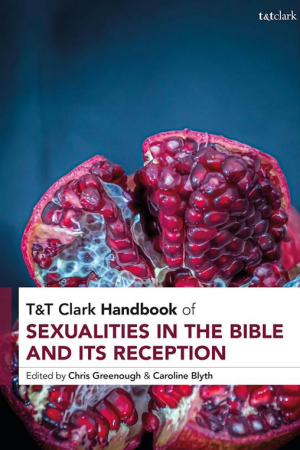
book cover showing title and pomegranate

Two of Shiloh’s longtime supporters and former co-directors are pleased to announce their forthcoming volume, T&T Clark Handbook of Sexualities in the Bible and Its Reception (Bloomsbury).

Bursting with over 23 chapters, the volume explores the range and richness of sexualities evoked in the biblical texts and their reception history. The handbook covers themes that have previously been subject to much debate in biblical scholarship, such as LGBTQI+ identities, heterosexuality, marriage, sexual violence, and circumcision, but it also engages with issues that tend to receive less scholarly attention, including asexuality, homoeroticism, voyeurism, sex work, masturbation, menstruation, pornography, disability, mental health, reproductive justice, and female violence.

The contributors come from a range of backgrounds and a diversity of disciplinary perspectives, including biblical studies, sexuality studies, theology, religious studies, gender studies, history, cultural studies, disability studies, psychology, and philosophy.

Caroline Blyth was a co-director of the Shiloh Project between 2017 and 2022. Having taken (very) early retirement from academia, she now works as a freelance editor and proofreader (check out Lamplight Editing). Her book Violence and the Bible for Normal People was published earlier this year, and she is also the co-host (with Shiloh director Emily Colgan) of the two-series podcast, The Bloody Bible, which investigates biblical violence through the lens of contemporary true crime.

Chris Greenough was a co-director of the Shiloh Project between 2021-2025. Chris took a step back from Shiloh in the summer of 2025. He is Professor of Social Sciences at Edge Hill University. As well as editing this volume, he is also co-editor on The Bible and Violence (forthcoming),along with Mmapula Kebaneilwe, Johnathan Jodamus and Johanna Stiebert.

The Handbook is available for pre-order. The editors are all too aware that the publisher is charging a high price for it (as we’ve come to expect with academic tomes), but hopefully, interested readers will be able to access a copy through their library.

Caroline and Chris will be organising a webinar to celebrate the volume and its contributors in Spring 2026. More details to follow!

read more

Here’s our new Film! Rape Culture and the Bible: Scholars Reflect

Today’s post is by Barbara Thiede. Barbara is the editor of a forthcoming book with the title Rape Culture and the Bible: Scholars Reflect (Routledge Focus). The book has at its centre interviews with a range of scholars and activists who have researched some aspect of rape culture, religion and the Bible. Excerpts from interviews with some of these scholars and activists are now part of a film, which you can access in the link below.

The film is here!

But first, a little background…

Since the 1980s, scholars have turned their focus to the distressing nature of depictions of sexual violence in the Hebrew Bible, as well as, though more tangentially, in the Greek Bible, and extra-canonical texts. However, the first application of the term rape culture to the Bible did not appear until 1997, in biblical scholar Harold C. Washington’s landmark article, “Violence and the Construction of Gender in the Hebrew Bible: A New Historicist Approach 1.”[1]

Despite decades-long efforts to identify the pervasive normalization of sexual assault and sexual violence in biblical texts, terms like rape and rape culture have remained controversial. Hence, this film! The film is called Rape Culture and the Bible: Scholars Reflect, which is the same title as that of the monograph which gave rise to and expands on it.

In this film, scholars and scholar-activists reflect on their own contributions to the study of rape culture and the Bible, as well as on the field’s history and legacy. They make clear the ethical foundations of this work: namely, that ancient Jewish and Christian texts reflect harmful ideologies. And, as many of them note, these ideologies continue to sanction and permit abuse that is ongoing—even pervasive—in contemporary communities, cultures, and religious institutions.

Pioneering and newer voices in the field, including, importantly, scholar-survivors themselves, demonstrate herein, again and again, how human and embodied, how personal, and how meaningful and urgent this work is.

Each participant shares in the conviction that academic work on sexual violence in biblical and related texts cannot be confined to scholarly settings. All understand that they are working with a phenomenon that extends beyond the page. Some describe their public work as a form of activism. Harold C. Washington, though, puts it like this: “It’s not activism; it’s clarity.”

The film is narrated by Johanna Stiebert and Barbara Thiede. It features Caroline Blyth, Yehudis Fletcher, Pamela Gordon, Sandie Gravett, Sarojini Nadar, Lisa Oakley, Mitzi Smith, Ken Stone, David Tombs, Eric Vanden Eykel, Harold C. Washington, Gerald West and Sithembiso Zwane.

All contributors in the film and two additional participants, too, namely Miryam Clough and Meredith J. C. Warren, feature at more length in the book forthcoming soon in the Routledge Focus series “Rape Culture, Religion and the Bible.” The book, edited by Barbara Thiede, will have the title Rape Culture and the Bible: Scholars Reflect. It will be made available open access.

Please watch and share this film. NB: The film will be shown at our event on Religion and Violence on Wednesday 8 October 2025 at the University of Leeds.


[1] See Biblical Interpretation5(4), 324-363. https://doi.org/10.1163/156851597X00120.

read more

New Book by Sarojini Nadar in the Routledge Series “Rape Culture, Religion and the Bible”

Sarojini Nadar is a long-time supporter of the Shiloh Project. Her important new book is available from this Wednesday and ready for pre-order right now (see here). The book’s title, Gender, Genocide, Gaza and the Book of Esther: Engaging Texts of Terrorism (Routledge 2025) already points to its acute timeliness.

Tell us about yourself, Sarojini.

I’m a feminist scholar of religion based in South Africa, working at the intersections of gender, race, and religion. I hold the Desmond Tutu South African Research Chair (SARChI) in Religion and Social Justice, at the University of the Western Cape. My work is shaped by the historical legacies of apartheid and Indian colonial indentured labour. It is grounded in a decolonial feminist approach that interrogates how systems of power—colonial, patriarchal, racial, and religious—intersect. Much of my scholarship focuses on how religious beliefs and sacred texts are implicated in both the legitimation of systemic violence, and in movements of resistance.

How did this book come about, and how does it relate to your broader work?

The initial research intention for the book was to conduct an intersectional feminist analysis of sexual violence in the Book of Esther—particularly in relation to the harem as a space of imperial power and sexual exploitation. I was interested in how beauty, silence, and submission function as survival strategies for women within oppressive contexts.

But while I was contemplating the book proposal, in October 2023, everything shifted. A full-scale genocidal assault on Gaza was underway. Then, Israeli Prime Minister Benjamin Netanyahu invoked a chilling biblical command in a public speech justifying the invasion of Gaza: “You must remember what Amalek has done to you—and we remember.” Suddenly, the book of Esther took on an urgent, horrifying resonance. Amalek is not only a figure in Deuteronomy or 1 Samuel; he is also in Esther. Haman—the book’s primary antagonist—is a descendant of Agag, the Amalekite king. The ancient enemy of Israel, whose complete annihilation is divinely commanded when the Israelites enter the so-called Promised Land, is embedded in the book of Esther!

When South Africa brought its genocide case against Israel before the International Court of Justice in January 2024, it cited several biblical references used by Israeli officials, arguing that they revealed genocidal intent—framing Palestinians as Amalekites to be wiped out. Since then, the United Nations, Amnesty International, Human Rights Watch, and other global organisations have echoed this analysis. This was not just retaliation. These were acts of genocide.

And so the focus of the book began to shift. Or perhaps more accurately, it began to expand. From the harem to the herem. What had started as a feminist reading of sexual violence in the harem could no longer ignore the parallel structure of ethnic violence in the herem. Herem, refers to a form of sacred ban or divine command that designates certain enemies for destruction, effectively setting them apart as sacred, and as “devoted to destruction.”

My earlier readings of Esther were profoundly shaped by the pioneering work of Phyllis Trible, whose book, ‘Texts of Terror’ invited us to read the Bible with feminist suspicion—to notice the sexual violence hidden in plain sight, and to lament what the text will not, and did not. Trible taught us to attend to the silences, to read against the grain, and to grieve the unnamed and the unremembered. But as a decolonial feminist scholar shaped by intersectional ethics, I read for more than gendered violence. I read for empire. I read for ethnic terror. I read for how sacred texts encode and sacralise violence—across registers of gender, race, and power. The subjugation of women’s bodies and the annihilation of ethnic others are entangled in what I call “sacred economies of violence.”

Sacred economies of violence is a conceptual framework I developed for the book, by drawing on Patricia Hill Collins’ matrices of domination, Pierre Bourdieu’s notion of the political economy of religion, and David Chidester’s expansion of Bourdieu’s idea into the political economy of the sacred. It describes an interlocking system in which violence functions as a currency—authorised through sacred sanction—to uphold patriarchal, racialised, and religious hierarchies. Within this economy, religion does not merely reflect existing structures of power; it actively legitimises and perpetuates them, embedding violence into the symbolic and material fabric of society. In the book, I trace how the book of Esther participates in these sacred economies of violence.

What are the key arguments of your book?

This book contends that in the book of Esther the two sites of violence—harem and herem—are not mutually exclusive. They are co-constitutive. I argue that the book of Esther is a politically and theologically charged narrative that legitimises violence by those who deem themselves “divinely chosen.”  Building on Achille Mbembe’s theory of necropolitics, I propose the framework of gendered theological necropolitics to analyse how the narrative constructs hierarchies of life and death. The text signals whose lives are valued and whose deaths are acceptable, all through the intersecting lenses of gender and ethnicity.

Crucially, I argue that these dynamics are not frozen in the past but are reactivated in our present moment—particularly in how the text is interpreted and mobilised in political discourse today. Hence, the book also focuses on how this ancient text is read and used far beyond the academy—in sermons, speeches, blogposts, and everyday religious practice. These “afterlives” of scripture are central to how texts function in the world.

What do you hope readers will take from this book?

I hope readers develop a sharper critical awareness of how sacred texts and their receptions can participate in the legitimation of violence—sometimes through overt endorsement, other times through subtle theological or narrative cues. The assumption that biblical texts are neutral or benign must be challenged. My goal is to expose how these texts continue to shape moral and political imaginaries in deeply consequential ways.

I also hope to prompt a broader conversation among biblical scholars about the political and pastoral uses of scripture in our time. Esther is a living text with potent—and often dangerous—afterlives. The widely quoted phrase “for such a time as this” is frequently used to inspire women’s empowerment, but in contexts like Gaza, it has also been weaponised to justify ethnic violence. What does “such a time” mean when it becomes a rallying cry for war?

Ultimately, I hope the book models a method of reading that is both ethically accountable and politically alert—one that refuses the comforts of simplicity, and instead embraces complexity in the service of justice.

What insight does the book provide into the relationship between religion and public life?

One of the central claims of this book—and indeed, of my broader scholarly work—is that religion does not reside neatly within private belief or institutional ritual. It is deeply entangled with public life, shaping social norms and popular moral discourse. This entanglement becomes particularly visible when we examine how sacred texts are interpreted and mobilised in everyday and political contexts.

The book of Esther offers a compelling case study for how normalisation of violence and theological instrumentalisation are perpetuated through popular Christian interpretations, where the text is often read through redemptive lenses that obscure its imperial and ethnic violence. This is why I take seriously both scholarly and popular religious interpretations. Non-academic readings from general public life, are central to understanding how sacred texts structure lived realities and legitimise or contest power. Popular media and discourse are therefore, legitimate and necessary sites of scholarly inquiry for those of us committed to tracing the effects of sacred texts in the world.

It is no accident, for example, that in 2024 a Donald Trump-aligned initiative emerged in the United States under the name Project Esther. This campaign—promoted by the Heritage Foundation as a “National Strategy to Combat Antisemitism”—appropriates the figure of Esther for Christian nationalist ends. As the Jewish Voice for Peace Academic Advisory Council has revealed, Project Esther in fact weaponises antisemitic conspiracy theories under the guise of Jewish protection, while disproportionately targeting Palestinians, Arabs, Muslims, and immigrants. It seeks to dismantle the broader Palestine solidarity movement, casting dissenting voices as threats to divine or national order. In this context, the figure of Esther becomes a rhetorical shield for repression—her story is invoked to sanctify silencing and justify surveillance.

This is precisely why intersectional feminist biblical scholars must interrogate both academic and popular uses of scripture. The question is not only what a text says, but what it is made to do in the world. When religious stories are used to authorise violence or shut down critique, our task is to expose and challenge those uses, while offering more just and accountable ways of reading.

Give us one quotation from the book that you think will make a reader go and read the rest.

This is an excerpt from Chapter 5:

“Initially portrayed as vulnerable, Esther strategically leverages her gendered position to gain access to power. Once she achieves that power, the narrative shifts towards an aggressive assertion of ethnic dominance. The extermination of Haman and his supporters, along with the deaths of 75,000 “others,” is rationalised through Esther’s Jewish identity, reflecting the historical violence inflicted upon Israel’s enemies within the framework of herem. Thus, the narrative complicates the portrayal of Esther as solely a victim; she operates within a structure of divine chosen-ness that legitimises her violent actions. Her body becomes a battleground for both imperial desire and divine selection, as she is first chosen for the king’s harem and later for God’s herem.”

read more

Announcing a day of events on Religion and Violence – 8 October 2025

[Updated/edited on 31 July 2025]

On Wednesday 8 October 2025, on the Leeds University campus (West Yorkshire, UK), we are organising a series of events centred on themes of Religion and Violence.

This day of activities will include presentations, panels, displays, mentoring sessions, and a campus walk, and the participation of activists, practitioners, academics, artists and students.

We have sought participation from the Emmanuel Chaplaincy Centre, Leeds Church Institute, Iqbal Centre, Centre for Religion and Public Life, and Centre for Jewish Studies. Most events will take place in the Emmanuel Chaplaincy Centre on the campus of the University of Leeds.

The events will lead up to the imminent publication (scheduled for Spring 2026) of our massive Bible and Violence Project (with Bloomsbury).

(Above – the editors of the Bible and Violence project: Johnathan Jodamus, Chris Greenough, Johanna Stiebert and Mmapula Kebaneilwe)

We have some fantastic participants who have confirmed attendance and many more are hoping and planning to attend. These include numerous participants well familiar to the Shiloh Project.

We also hope to organise other, community-centred, events in proximity to the day, to make the most of such a fabulous group being here.

On Thursday 9 October there will be a Centre for Religion and Public Life seminar at the University of Leeds, with Rabbi Dr. Barbara Thiede: 11.30-13.00, Botany House 1.03. On the afternoon of the same day there will be a workshop run by Professor David Tombs. This will be held in Otley and numbers are limited.

Rabbi Dr Barbara Thiede

The events are organised by Gregorio Alonso (History, University of Leeds) and Shiloh’s Johanna Stiebert (Theology and Religious Studies, University of Leeds), and precipitated by the coincident proposed visits to Leeds of Dr. Chauncey Diego Francisco Handy (Reed College, OR, USA) and Rabbi Dr. Barbara Thiede (University of North Carolina, Charlotte, NC, USA). Since then, the following fabulous people have also confirmed attendance: Rabbi Professor Deborah Kahn-Harris (Leo Baeck College, London), Saima Afzal (MBE, founder of Community Interest Company S.A.S. Rights), Professor David Tombs (Otago University, Aotearoa New Zealand), Dr. Sherry Ashworth (novelist), Ms Victoria Mildenhall, Rosie Dawson (broadcaster), Dr Sam Lewis (Criminology, University of Leeds, founder of FRIVA the Feminist Research Into Violence and Abuse Network), Dr. Katie Edwards (journalist, broadcaster and writer), Dr. Meredith Warren (University of Sheffield), Professor Daniel Smith-Christopher (Loyola Marymount University), Dr. Jessie Fubara-Manuel (University of Edinburgh), Dr. M. I. Rey (Babson College), Professor Joachim Kuegler (Bamberg University, Germany), Professor Sarojini Nadar  (University of the Western Cape, South Africa), Dr. Johnathan Jodamus (University of the Western Cape, South Africa), Emeritus Professor Hugh Pyper, Dr. Eric Vanden Eykel (Ferrum College, VA, USA). Dr. Sarah Nicholson (University of Glasgow), and Katheryne Howe (artist and PhD candidate).

(Above: Dr. Chauncey Diego Francisco Handy)

There will be:

– displays of images and artworks…

– a  mentoring session (with Barbara Thiede and Johanna Stiebert) for scholars working in an area of rape culture, religion and/or the Bible who might be interested in publishing in our Routledge Focus series

– opportunity to see a new book on Judeophobia and the New Testament and to talk to two of the book’s editors (with Meredith Warren and Eric Vanden Eykel)…

– panel discussions…

– presentations…

– a campus walk taking in points of interest with regard to religion and violence…

– opportunity for informal networking and idea-spinning…

– engagement on how to join our energies and sense of purpose to support one another and work towards more peace, more community, and healing from religious violence and trauma.

In the evening there will be a dinner in honour and memory of Professor J. Cheryl Exum whose scholarly integrity and groundbreaking feminist scholarship, including on violence against women, has been significant for many of us. The dinner is by invitation only. (Please contact Johanna.) We are planning an edited volume with Sheffield Phoenix Press centred on Cheryl Exum’s legacy. Cheryl was director of Sheffield Phoenix from its foundation until 2016. If you would like to contribute to the volume, please contact Johanna.

Professor J. Cheryl Exum

For more information on the events, and planned volume, please contact Johanna: [email protected]

read more

New Book! Behold the Men

We are thrilled to tell you more about a new book, Behold the Men (SCM, 2025), co-edited by Robert Beckford and Rachel Starr,

Tell us a bit about you.

We are both contextual theologians, shaped by distinct traditions and experiences. Robert is a black liberation theologian and Rachel a (critical) white feminist theologian. Beginning work on the book, we had different questions we wanted to explore in relation to theologies of masculinities. More than a dialogue, Behold the Men brings together a wide range of voices, styles, perspectives from over a dozen contributors (including the Shiloh Project’s Chris Greenough), all offering something from their own lived experience and reflections.

What motivated you to carry out the research for this book?

Our students! When teaching on gender and theology, male students repeatedly asked what theological resources there were for exploring masculinities. There seemed to be a need for an introductory resource which would help direct students to existing material as well as identify further work to be done.

We were aware of so much insightful work within biblical studies around masculinities. In biblical studies, the conversations seem more developed than in theology. Of course, there has been work on masculinities within practical theology, particularly in pastoral theology by Mark Pryce and Delroy Hall. In spirituality also, Joseph Gelfer and others have asked critical questions about men’s spirituality movements and how they often serve to reinforce dominant, violent models of masculinity. We’ve tried to map some of these existing conversations as well as identify gaps.

The book has been out a month now, and we’ve had lots of conversations about how timely it is in relation to global political developments. But to be honest, it’s long overdue. The questions and connections we invite people to explore in the book are vital ones. We recognise the negative impact of dominant violent models of masculinity on people, politics and planet. And we recognise how significant religion is in shaping people’s identity, beliefs and behaviours. In the church and beyond, we’re aware of how gender, alongside race and other identity markers, is used to limit who people are and how they relate to others. To fix relationships of power and inequality.

Unlike many books on men and Christianity, the primary focus is not on how to get more men to attend church. Rather, it’s concerned with the type of masculinity that churches often promote, especially those churches which are keen to attract more men. So, another aim of the book is to encourage churches to explore what models of masculinity they are encouraging and whether those models are healthy, inclusive ones.

What impact do you hope it will have?

We have big hopes for this book! Already it seems to be generating conversations and helping identify further work needed. In March 2025, Queen’s is hosting an event to both launch the book and provide a space for conversation amongst people from a range of contexts who are exploring models of masculinity within Christian traditions and beyond.

Behold the Men is, of course, a play on Pilate’s words (John 19.5), mocking words that form part of the violence of the crucifixion story. They invite others to look at Jesus and see his vulnerability and failure. In some translations, a similar phrase appears in Judges 19.22, ‘behold, the men of the city’, once again serving as a preface to violence, this time carried out by the men being observed.

By naming the book, Behold the Men, we are asking readers to look at, to pay attention to men and models of masculinity. There is something to see here, something to assess and analyse. Violence, pain and loss, yes – but perhaps also possibilities for new ways of being, possibilities which emerge from paying careful attention to ourselves and others. We hope the title further invites reflection on holding, embracing, connection. What does it mean to be held or embraced as a man? How are men helped to pay attention to their own and others’ power and vulnerability in such embraces? The book, we hope, is an invitation to embrace both who we are and the potential for connection and change.

What else are you working on?

Robert: I am currently developing a multi-media project in response to the Christian based reparations projects in Britain.

Rachel: I’m delighted to be involved in the Bible and Violence project with colleagues from the Shiloh Project, especially in helping bring in Latin American biblical scholars and perspectives. With Elizabeth Gareca and Larry José Madrigal, I co-edited a recent issue of Revista de Interpretación Bíblica Latinoamericana focused on resistant and resilient readings of the Bible in contexts of violence. Coming up also is the re-publication of a journal article exploring reading Mark 7 as a white woman, first published in Practical Theology. And finally, I’m delighted to have contributed to God’s Stories As Told By God’s Children, produced by The Bible for Normal People and out March 2025.

Where can we find out more about you?

You can visit our Queen’s staff pages: Robert and Rachel. Robert can often be found on BBC Radio 4 and occasionally writes for The Guardian. Rachel kept a blog while living and studying in Argentina and, in recent years, has revived it in a low-key way.

Give us one quote to whet our appetites!

‘What might an embodied, earthed theological model of masculinity look like? …

Such a model of masculinity would begin by recognizing that men are bodies and souls – bodysouls – and must find ways of accepting and valuing their whole self (Louw 2012). It would encourage men to engage with the complexity of their bodies, lives and stories: to listen to their bodies that speak of trauma and grief, violence and pain, joy and hope. It would make space for fluid notions of sex and gender identity, roles and relationships. Queer theologies have much to offer here (Gelfer 2009). An embodied earthed model would support men in discovering and expressing their emotions, to understand that to be human is to be finite and vulnerable (World Council of Churches 2005, Louw 2012). It would bear witness to the relational nature of humanity, that all humans, men included, can only exist in relationship (World Council of Churches 2005, Anderson 2020). As Phyllis Trible (1978) observed on reading Genesis 2, the first human is not gendered, only becoming so through the creation of a second person, a partner. Gender is relational, and thus to be a man can only be understood in relation to other men, women and non-binary people; in relation to the wider world; and, for people of faith, in relation to God. Finally, such a model would challenge men to work for justice, equality and inclusion (Baker-Fletcher 1996; Anderson 2020).’ (Beckford and Starr 2025, pp. 10–20)

read more

Book Launch and Symposium on Abortion and Catholicism

Abortion and Catholicism

Wednesday 27th November 2024 – 14.30 – 17.00 (GMT)

To celebrate the launch of the book, Abortion and Catholicism in Britain, by Sarah-Jane Page and Pam Lowe (Palgrave Studies in Lived Religion and Societal Challenges), the Identities, Citizenship, Equalities and Migration Centre (School of Sociology and Social Policy, University of Nottingham) will be hosting an afternoon symposium (in person and online) on abortion and Catholicism.

Speakers will include:

Speakers at the book launch

Sarah-Jane Page (University of Nottingham),

Pam Lowe (Aston University)

Rebecca Todd Peters (Elon University)

Emily Reimer-Barry (University of San Diego)

Dawn Llewellyn (University of Chester)

Fiona Bloomer (Ulster University).

This will be chaired by Morteza Hashemi (ICEMiC, University of Nottingham)

The Symposium will end with light refreshments for those attending in person.

Please register your place by using this link.

read more

Routledge Focus Series: Rape Culture, Religion and the Bible…

The Routledge Focus series Rape Culture, Religion and the Bible is thriving and now has twelve published volumes, with several more in production and under contract. 

Each compact volume is focused on a concise topic and no more than 50,000 words in length. The volumes are becoming widely used in teaching settings and reading groups.

Over the next few weeks, to celebrate, we will profile some of the authors and volumes – and match faces with names and books authored 🙂

Thank you to Saima Afzal for creating the collage of authors and books!

read more

New Book: The Bible and Gender-Based Violence in Botswana

In this post we feature the forthcoming book The Bible and Gender-Based Violence in Botswana (Routledge, 2024) by Mmapula Diana Kebaneilwe. The book is in the Routledge Focus series, ‘Rape Culture, Religion and the Bible’, which is edited by Emily Colgan, Johanna Stiebert and Barbara Thiede. The book is out in March and ready for pre-order from 22 February 2024. (Yes, this post is early… – but we just couldn’t wait!) Read about the book here first!

  1. How did the book come about?

The current rampancy of gender-based violence (GBV) against women and girls in Christianised Botswana prompted the writing of this book. As a Motswana woman who lives and has lived in this country since birth, I have witnessed uncountable inhumane acts of violence that disproportionately affect women and girls. I have experienced GBV myself, as have many women and girls that I know personally (family and friends), as well as those I only read or hear about on different media platforms, including the national television station, newspapers, etc. They, we have suffered GBV, and many have lost their lives at the hands of men and boys, those who are most often the perpetrators of GBV. Therefore, my identity, experiences, and research created in me the hunger to put together in print Batswana women’s stories of GBV alongside stories of GBV against biblical women. My quest has been to explore how the Bible and the Botswana faith communities it inspires intersect with traditional political landscapes to reinforce GBV. 

  • What does activism mean to you, and how does this book relate to religion and GBV?

Activism means everything to me. I am of the view that keeping quiet about acts of violence and injustice of whatever nature, including GBV, equates to colluding with perpetrators, and hence, I choose to expose, name, and seek ways to correct such. Researching and writing on GBV, as in this book, is a way of campaigning for social change regarding women’s and girls’ rights. Their rights are being stifled by gender inequality, which has resulted in our pandemic of GBV. 

The book relates to religion and GBV in that stories of GBV against women in Botswana are read alongside similar stories from the Bible, the sacred literature of Christianity, the dominant religion in Botswana. My research has revealed unbelievable resonance between GBV against textual biblical female characters and Botswana’s real flesh and blood female persons. The exercise of inter-reading or co-reading is an important one, given the authority and respect accorded the Bible in the Botswana context where many people intimately associate themselves with its faith and teachings.

  • What are the main themes of the book?

The main themes of the book are as follows:

  • Demonstrating and acknowledging that GBV is endemic in the Bible and in Botswana
  • Insisting that there should be no recycling of biblical injustices: read it, name it, and fix it
  • Reading the Bible and its stories of GBV in a quest for transformational revelation and for gender justice in Botswana and beyond.
  • Who would benefit from the book?

The book will benefit everyone willing to seek positive change in regard to gender equality, and is intended for a wide readership, including researchers, postgraduates, church leaders and other representatives of religious institutions, and upper-level undergraduates.

  • Give us a quotation from your book and tell us why you chose it?

“Like a mirror, the Bible is an accessible resource—but only if we first, use it and second, use it purposefully and constructively with integrity” (Kebaneilwe 2024, 84).

I choose the above quotation because I believe that the Bible is confrontational in nature by reflecting parts of life that we do not want to see or do not want to admit to: jealousy, passion, anger, violence, etc. Like a mirror, its transformational effect can only be accessible if we first admit what we see when we look into its pages.  Ultimately, concealing, spiritualising, or twisting the rottenness in biblical texts will only serve to perpetuate the same in our world, which explains why even in Christianised contexts like Botswana, we still find heinous acts of injustice and violence, including, in this case GBV. 

Congratulations to Mmapula from everyone at The Shiloh Project!

read more

New Publication: Marriage, Bible, Violence: Intersections and Impacts

Marriage, Bible, Violence - book cover

In this post, we feature the bookMarriage, Bible, Violence: Intersections and Impacts (Routledge, 2023), by Saima Afzal and Johanna Stiebert, which is out this week! We caught up with them both for an interview.

How did the book come about?

The two of us have been friends for some years. We first met at the University of Leeds when Saima was completing her MA in Religion and Public Life, and we have collaborated on a variety of campaigns focused around preventing gender-based violence.

The book, while succinct, took longer to write than we had anticipated – not least, because of the Covid-19 pandemic. But the harder it was for us to find time for writing, the clearer the importance of this book became. We could see the harm and damage caused by instrumentalising sacred texts to afflict real people, with women and girls disproportionately represented among victims and survivors. This was exacerbated by the pandemic. Resisting such violence on multiple fronts, including with research-based arguments, drove us on.

Tell us about your collaboration – how you met, what work you do. 

Like we said, we met at the University of Leeds where Johanna works, and Saima completed an MA. Saima has a wealth of practitioner experience from working in local government, child protection, and as National Crime Agency-registered expert witness and Independent Member of the Lancashire (UK) Police Authority, with a national Equality, Diversity, and Human Rights portfolio. Johanna is a biblical scholar with particular interest in topics of gender and gender-based violence. She co-founded and co-directs The Shiloh Project.

Together we co-direct (together with researchers Mmapula Kebaneilwe and Emma Tomalin) a Community Interest Company (CIC) founded by Saima, called SAS Rights. This CIC is the primary vehicle for much of our activist work. The book is our co-production and an attempt to combine our perspectives as researchers and as activists to explore the multiple ways the topics of ‘marriage’ and ‘violence’ are enmeshed. We use the Bible as our focus for demonstrating some of these intersections and the impact they have on real lives.

Johanna and Saima

What does ‘activism’ mean to you, and how does this relate to religion and gender-based violence?

Activism is central to much of what we do. Religion is central to our research and central to the lives of many in the communities we work in. Each of us identifies as both scholar and activist, even if in our working lives, these carry different emphases. We share a conviction that activism benefits from a basis in research and research benefits from having impact on positive social change.

The book is based on research and analysis of biblical texts, yes. But in the course of this, we are mindful of and remind readers why these matter: that is, because recourse to the authority and ‘plain meaning’ of the Bible has had and continues to have impact on real people’s lives. Sometimes, this impact is violent and traumatic, notably when the Bible is weaponised to justify intimate partner violence. As such, the book explores aspects of family violence and domestic abuse and the role of religion within this. These discussions are increasingly in the public domain, which is a welcome development.

What are the main themes of the book?

‘Marriage’ and ‘the Bible’ are both prominent themes in day-to-day contexts, including in popular culture. One ideology very prominent in claims about ‘biblical marriage’ is complementarianism. One purpose of this book is to explore the disjuncture between, on the one hand, complementarian accounts of biblical marriage and, on the other, intersections of marriage and violence in texts from Jewish and Christian Scriptures.

We challenge authoritative complementarian claims to the Bible’s allegedly clear and unequivocal directions on marriage, and we refute these claims with analysis of the muddled and often violent depictions of marriage in the Bible itself. We focus on the influential pronouncements on ‘biblical marriage’ by the US Family Research Council and Council for Biblical Manhood and Womanhood and analyse such key texts as Genesis 1–3, Malachi 2, and Ephesians 5.

Who would benefit from the book?

This book will, we hope, appeal to students of biblical studies and theology, as well as anyone interested in research-based activism and in how sacred texts are directed towards modern day-to-day life. 

Saima and Johanna [2]

Give us a quote from the book you are most pleased with and why!

Can we have two? (We are two authors, after all!)

“[In Genesis 2–3] one woman (Eve) is created to be the companion of one man (Adam), and prior to this humanity is told to be fruitful and multiply (Gen 1:28). Extraordinarily, this story is used to justify all of monogamy; heteronormativity; heterosexual, monogamous, sexually exclusive marriage to the exclusion of all other kinds of marriage; female submission to male headship; and procreation. It is also used to condemn homosexuality, non-binary gender, transgender, polygamy, feminism, abortion, divorce, and, though less often, single life, elective childlessness, and women’s ordination. Wow. For a short mythological story, featuring an anthropomorphic deity, a talking serpent, and magical fruit, in a biblical book that makes no claims to divine authorship or inspiration, a story which never makes any explicit reference to marriage, let alone feminism, or homosexuality, this is quite something…”

This quote shows up some of the brazenness of claims regularly made about the clarity of the Bible’s claims on ‘marriage’ – yet there is not even a word that captures ‘marriage’ in the whole of the Hebrew Bible!

“Often laws are characterised as ‘secular’, with religious law overriding secular law. Adherence to religious law over secular law is even seen as a proof of faithfulness to God. One woman I am working with acknowledged her husband’s abuse and abandonment. But he had made her swear on her sacred book that she would not report him to the police. She will not budge from this oath, and I know that if I suggested it I would lose her trust.”

This quote is a reflection by Saima on some of the hands-on work she does. It is a reminder of why we wrote this book. 

Saima and Johanna

The book is in the Routledge Focus series Rape Culture, Religion and the Bible, edited by Emily Colgan, Johanna Stiebert, and Barbara Thiede. Books in the series are concise (between 25,000 and 50,000 words – all inclusive) and explore some aspect of rape culture (e.g., sexualised microaggressions, sexual violence) alongside some aspect of religion and/or the Bible. We are very interested in proposals exploring religions other than those associated with the Bible. If you would like to find out more, discuss this, or propose a volume, please contact Johanna: [email protected].

If you are interested in the topic of marriage, Bible, and violence, you might also like Helen Paynter’s book, The Bible Doesn’t Tell Me So. It is reviewed on our blog, here.

read more
1 2 3 5
Page 1 of 5